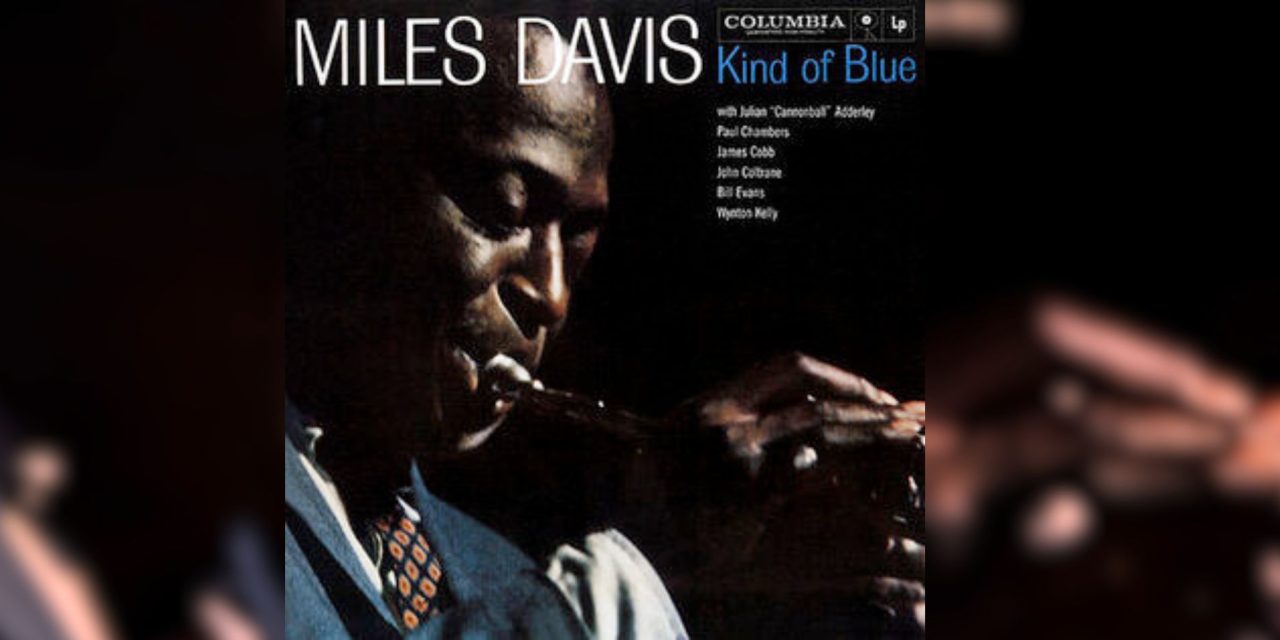
Sometimes the most powerful musical statement is not the note played—it is the note left hanging in silence.
That idea sits at the heart of Miles Davis’s landmark 1959 album Kind of Blue, a record that changed jazz by doing less, not more. At a time when technical brilliance often meant speed, complexity, and dazzling solos, Davis moved in the opposite direction. He stripped things back.
The result was something timeless. With spacious arrangements, modal structures, and remarkable emotional subtlety, Kind of Blue proved that restraint could hit just as hard—if not harder—than virtuosity. This piece explores Davis’s creative vision, the album’s minimalist brilliance, and why fewer choices often lead to deeper expression.
Introduction: The Paradox of Restraint
Released in 1959 through Columbia Records, Kind of Blue achieved extraordinary emotional depth through deliberate limitation rather than technical excess. While much of jazz at the time leaned toward fast tempos and dense harmonic movement, Davis embraced space, patience, and simplicity.
The album runs for about 45 minutes across five tracks, yet it never feels rushed or overloaded. Each piece unfolds naturally, giving every phrase room to breathe. Instead of filling every moment, Davis trusted silence and restraint to do part of the work.
That choice helped make the album one of the most influential jazz recordings ever made. Kind of Blue entered the Grammy Hall of Fame in 1992 and later ranked at number 12 on Rolling Stone’s 500 Greatest Albums list.
Its legacy remains powerful because it teaches something many artists still struggle with today: complexity is not always the path to impact.
The Making of Kind of Blue
Kind of Blue was recorded across two sessions in March and April 1959 at Columbia’s legendary 30th Street Studio. Davis assembled a remarkable seven-piece lineup featuring Bill Evans, John Coltrane, Cannonball Adderley, Paul Chambers, Jimmy Cobb, and Wynton Kelly.
Rather than following the chord-heavy structures common in hard bop, Davis pushed toward modal jazz. This marked a major creative shift in his musical direction.
His process was unconventional. Instead of handing musicians fully written arrangements, Davis provided only skeletal frameworks. In many cases, the musicians had minimal rehearsal and were encouraged to respond instinctively in the moment.
That spontaneity became essential to the album’s magic.
Columbia’s engineers captured much of the material in first takes, preserving the raw, natural flow of the sessions. Perfection was never the goal. Atmosphere, emotion, and honest expression mattered more.
Davis’s Vision and the Modal Approach
Davis’s biggest innovation on Kind of Blue was his commitment to modal improvisation.
Instead of rapid chord changes every two or four bars, he built songs around one or two scales—or modes—for extended stretches. This gave soloists far more room to explore melody, phrasing, and emotion.
So What, for example, remains largely in D Dorian through its main sections. That harmonic simplicity gives the musicians freedom to shape ideas without constantly reacting to shifting chords.
Flamenco Sketches takes a different approach, moving slowly through five modes, including Phrygian and Lydian. The result feels spacious, reflective, and almost meditative.
Bill Evans played a crucial role in making this work. His piano voicings established the tonal center without overcrowding the arrangement. He created harmonic clarity while leaving plenty of space for the soloists.
Paul Chambers did the same on bass, using steady ostinato patterns to anchor each modal framework.
This approach changed how improvisation felt. Instead of racing through harmonic changes, musicians could focus on nuance—tone, silence, pacing, and emotional weight.
That freedom gave Kind of Blue its signature quiet intensity.
Conclusion
Kind of Blue remains a masterclass in artistic restraint.
Miles Davis understood something many musicians spend years learning: saying less often says more. By limiting harmonic movement and embracing space, he created music that feels deeply expressive without ever sounding forced.
The album’s brilliance lies not in excess but in intention. Every note matters because every silence matters too.
More than six decades later, Kind of Blue still feels fresh because its lessons extend far beyond jazz. Whether in music, art, writing, or design, restraint can unlock surprising emotional power.
Sometimes, the strongest statement is knowing what to leave out.
Kind of Blue changed music by proving fewer choices can create deeper impact. Could restraint be the secret weapon most creators overlook? Stay locked into DLK Lounge for more sharp breakdowns of legendary albums and the lessons behind their genius.
