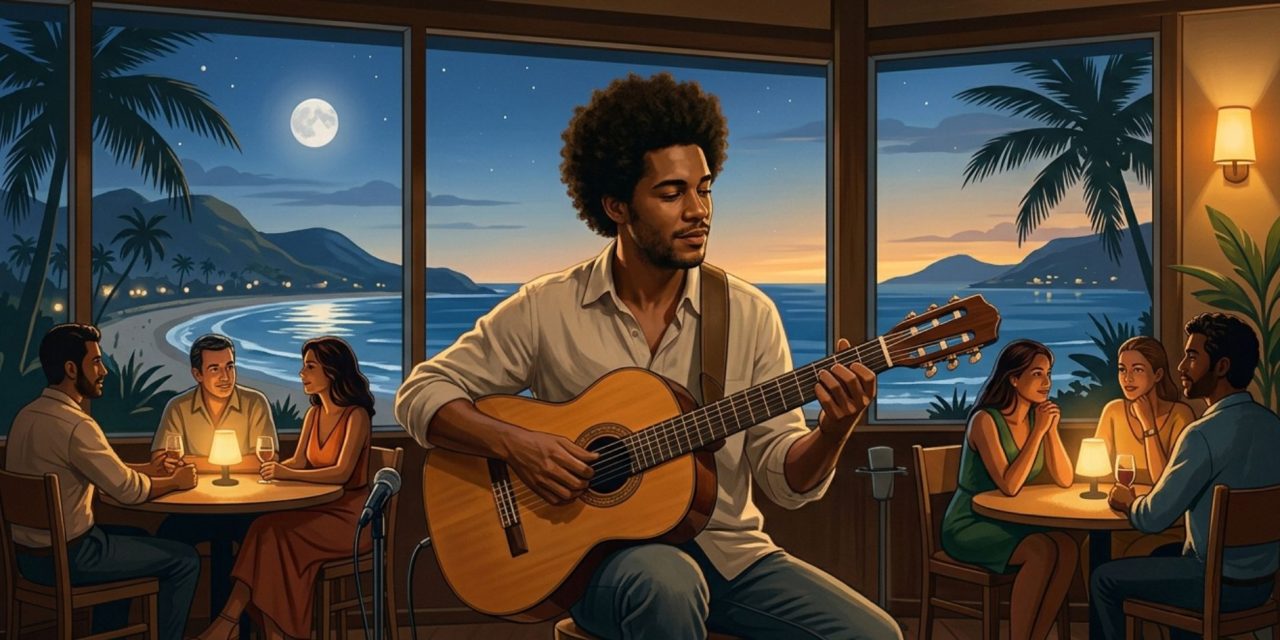
Some genres make you want to dance. Others make you want to think. Bossa Nova somehow makes you want to sip coffee near the ocean at sunset while doing both.
Born along Rio de Janeiro’s sunlit coastline, Bossa Nova quietly changed the sound of modern jazz. It traded loud percussion for soft syncopation, bold vocals for intimate whispers, and flashy solos for subtle sophistication. The result was a sound that felt effortless, elegant, and unmistakably cool.
In this guide, we’ll explore how Bossa Nova began, the pioneers who shaped it, and the musical traits that gave jazz one of its smoothest coastal transformations.
Origins and Birth of Bossa Nova
Bossa Nova emerged in Rio de Janeiro’s beachside neighborhoods between 1957 and 1963. Unlike many music movements born in major concert halls or packed clubs, this one began inside apartments and intimate living spaces.
Small gatherings became the creative engine behind the genre. Musicians met in relaxed settings to experiment with quieter, more refined approaches to Brazilian music. These sessions felt less like formal performances and more like late-night conversations through sound.
One address became especially important: Rua Montenegro 120. It was here that musicians like Antônio Carlos Jobim, João Gilberto, and Vinícius de Moraes developed ideas that would shape the genre.
The turning point came in 1958 with the release of Chega de Saudade. This recording introduced listeners to a softer vocal style, understated guitar rhythms, and a more intimate musical language.
Bossa Nova marked a deliberate shift away from carnival samba’s loud, festive energy. Instead, it embraced subtlety, restraint, and emotional nuance. It was music designed for close listening.
Rio de Janeiro Roots
Bossa Nova was deeply tied to Rio’s geography and atmosphere. The residential neighborhoods of Ipanema and Copacabana became its natural home.
These areas offered more than scenery. They created the mood that shaped the music itself.
Late-night apartment sessions became common, especially after 10 p.m. The quiet surroundings encouraged softer vocals and gentler instrumentation. Instead of projecting over crowds, singers adapted to intimate spaces.
That intimacy became one of the defining features of Bossa Nova.
The ocean breeze, relaxed pace, and urban calm all influenced the genre’s identity. You can hear that environment in the music. It feels warm, airy, and effortless.
Between 1960 and 1962, a vibrant social circuit connected Ipanema apartments to Copacabana nightclubs. Musicians moved between these spaces, refining ideas and building momentum.
Middle-class audiences quickly embraced this fresh sound. Many were looking for something more refined than traditional samba celebrations. Bossa Nova offered sophistication without losing Brazilian soul.
Key Pioneers
Several artists helped define Bossa Nova’s early sound, but four names stand above the rest.
João Gilberto was arguably the most influential. His guitar technique and whisper-soft vocals became the blueprint for Bossa Nova performance. His style felt understated, but every rhythm and phrase carried precision.
Antônio Carlos Jobim provided the harmonic foundation. His sophisticated chord progressions, often built around lush minor sevenths and jazz-inspired harmonies, gave Bossa Nova its signature richness.
By 1962, Jobim had composed dozens of songs that defined the genre’s melodic identity.
Vinícius de Moraes added lyrical depth. His poetic writing gave emotional and romantic texture to the music. He helped transform Bossa Nova into something more than just a rhythmic innovation.
Then came Astrud Gilberto, whose soft vocals helped introduce the genre to global audiences.
Her work on The Girl from Ipanema became a landmark moment in music history. The song carried Bossa Nova far beyond Brazil and cemented its place in jazz and popular culture.
Together, these artists created a genre that felt intimate, modern, and timeless.
Conclusion
Bossa Nova did not revolutionize jazz through volume or spectacle. It changed everything through subtlety.
Its genius lies in restraint. Soft vocals, delicate rhythms, and sophisticated harmonies created a sound that felt both relaxed and deeply expressive. It proved that music does not need to shout to leave a lasting impact.
Decades later, Bossa Nova still feels fresh. Its influence continues to shape jazz, lounge music, indie production, and modern chill playlists. Few genres have captured elegance and emotional warmth so effortlessly.
What makes Bossa Nova so timeless—the rhythms, the harmonies, or that unmistakable coastal feeling?
Stay tuned with DLK Lounge as we explore more iconic genres, legendary records, and the sounds that continue shaping music culture.
