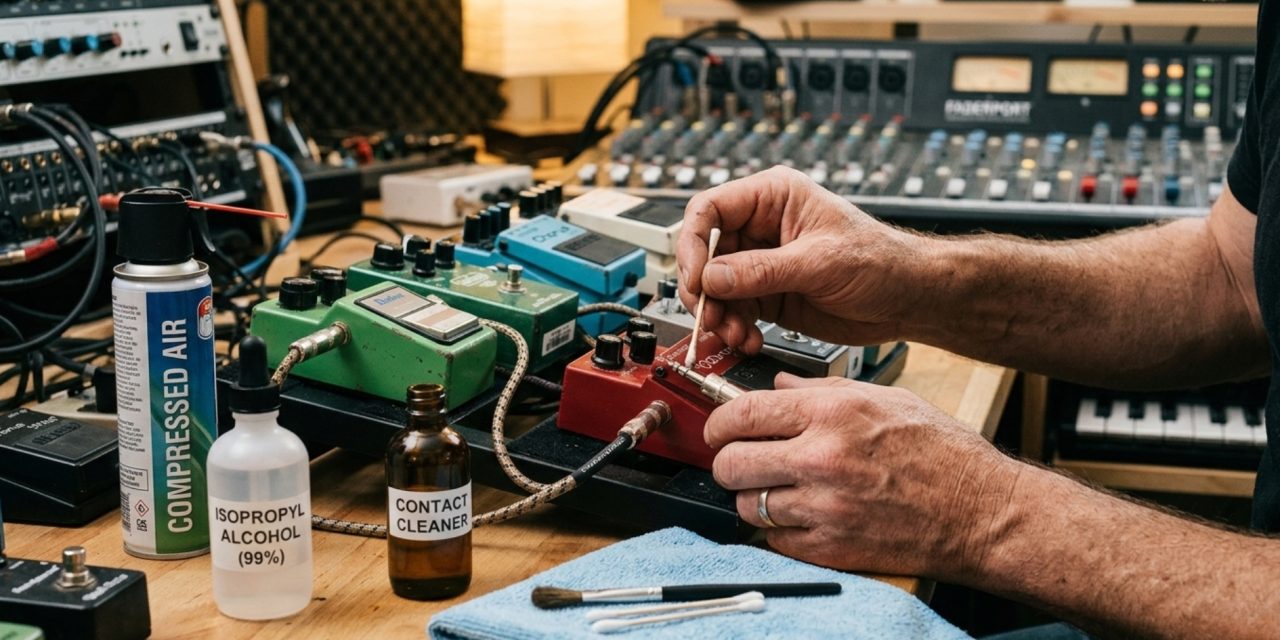
Dust, oxidation, and stage grime rarely announce themselves — they just slowly steal clarity from your signal chain. If your lounge sessions depend on warm textures, quiet noise floors, and consistent pedal response, maintenance becomes part of tone shaping.
The right cleaning tools prevent corrosion on jacks, protect switches, and preserve aluminum chassis without damaging components. A simple, consistent routine keeps your board reliable for studio recordings and live sets alike.
Core Cleaning Tools Comparison
Below is a practical comparison of essential cleaning supplies for pedalboards, cables, and connectors.
| Tool Name | Price | Key Features | Best For | Pros / Cons |
| DeoxIT D5 | $18 | Contact cleaner, deoxidizer, lubricant | Oxidation prevention on jacks and connectors | Pros: Long-lasting protection, safe on plastics. Cons: Strong odor, needs ventilation. |
| Caig DN5 | $15 | No-residue cleaner protects metals | Pedal jacks and switches | Pros: Dries fast, non-conductive. Cons: Less lubrication than D5. |
| 99% Isopropyl Alcohol | $6 | Fast-drying solvent, evaporates quickly | General dirt and sweat buildup | Pros: Affordable, widely available. Cons: Dries rubber, no protective coating. |
| Microfiber Cloths | $12 (12-pack) | Lint-free, non-abrasive, reusable | Aluminum chassis wiping | Pros: No scratches, washable. Cons: Must be cleaned regularly. |
| Compressed Air | $8 | High-pressure, moisture-free blast | Dust in pedal enclosures | Pros: Reaches tight spots. Cons: Can spread debris if overused. |
| iKlear Guitar Kit | $25 | Specialized formula, polishing cloth | Pedal surfaces and cables | Pros: Streak-free finish. Cons: Higher kit cost. |
When to Use Each Cleaner
DeoxIT D5 excels at removing oxidation from connector pins and leaving a protective film that reduces future corrosion. It is ideal when you notice crackling, intermittent signal loss, or degraded tone caused by oxidized jacks.
99% isopropyl alcohol works best for quick surface cleaning. It handles sweat corrosion, fingerprint residue, and visible grime but does not leave protection behind. For an aluminum chassis, both are safe when applied sparingly and wiped dry immediately.
Begin every cleaning session with compressed air to remove loose dust from pedalboard cables and from tight corners in the enclosure. Follow with targeted contact cleaner inside jacks, then gently wipe surfaces with microfiber cloths to prevent scratches. This layered routine addresses the silent cause of tone loss — dirt buildup that disrupts clean signal flow.
Best Practices for Pedal Maintenance
Always test cleaning products on a small, hidden area before applying broadly, especially around potentiometers and switches. Avoid oversaturating internal components, and allow proper drying time before reconnecting power. Overapplication can attract more dust or cause residue buildup, ultimately leading to costly repairs.
Routine maintenance — monthly for studio use, more frequently for touring setups — extends gear life and preserves tonal clarity. Clean connectors ensure stable signal transmission, lower noise floors, and consistent response during recording sessions. In lounge-style productions where subtle textures and dynamic control matter, even minor signal interference can dull warmth and presence.
Conclusion
Effective cleaning is not cosmetic; it is functional preservation of your signal chain. Using targeted contact cleaners like DeoxIT for oxidation, isopropyl alcohol for surface grime, microfiber cloths for safe wiping, and compressed air for dust removal creates a balanced maintenance routine.
This approach prevents corrosion, protects hardware, and maintains a consistent tone across pedals and cables. For creators crafting polished studio sessions or intimate lounge mixes, regular cleaning safeguards both reliability and sonic integrity.
Is your pedalboard delivering the clean signal your lounge sessions deserve? Discover more tone-preserving gear insights and studio refinement strategies only at DLK Lounge.
