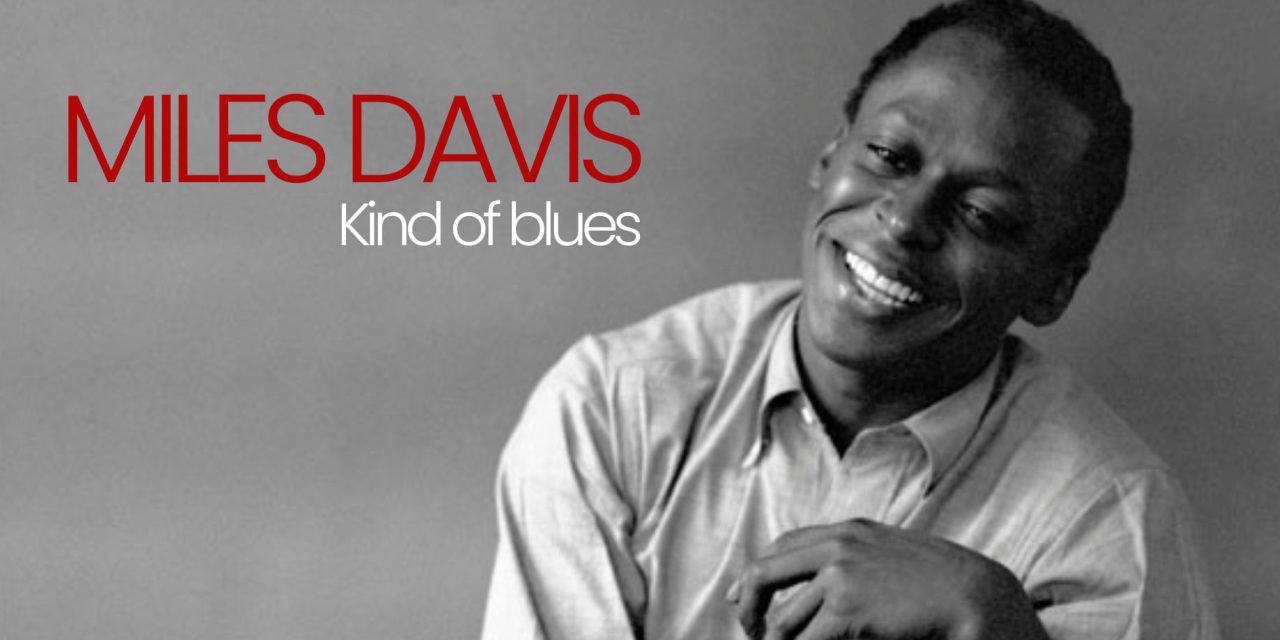
Did you know that the best-selling jazz album of all time became legendary not because it played more notes—but because it played fewer?
It sounds almost backwards. Most people assume musical greatness comes from dazzling solos, impossible speed, or enough chord changes to make your head spin. Then Kind of Blue comes along and quietly says, “Or…we could just breathe.”
Released in 1959, Miles Davis’s masterpiece challenged nearly every expectation of modern jazz. Instead of filling every moment with technical brilliance, the musicians embraced space, silence, and simplicity. The result was an album that felt deeply emotional without ever trying too hard.
Here are a few fascinating reasons why Kind of Blue continues to influence musicians, producers, and listeners more than six decades later.
The Album That Proved Simplicity Could Be Powerful
One of the biggest surprises about Kind of Blue is how much it accomplished with so little.
Released by Columbia Records in 1959, the album arrived at a time when many jazz artists were pushing the limits of speed, harmonic complexity, and technical virtuosity. Rather than joining that race, Miles Davis deliberately moved in the opposite direction.
The album spans just under 45 minutes across five carefully crafted tracks. Instead of crowding each piece with ideas, every composition allows melodies to unfold naturally, giving each instrument room to breathe.
That decision became one of the album’s defining strengths.
Listeners quickly discovered that a handful of carefully chosen notes could leave a stronger emotional impression than the busiest arrangements. Rather than overwhelming the audience, the music invited them into the performance.
The impact has endured for generations.
Kind of Blue entered the Grammy Hall of Fame in 1992 and has consistently ranked among the greatest albums ever recorded, including its placement at number twelve on Rolling Stone’s list of the 500 Greatest Albums. More than six decades later, it remains one of the most celebrated recordings in jazz history.
Did You Know? Most of the Album Was Built Around Musical Freedom
Another fascinating fact is that Kind of Blue was created with surprisingly few written instructions.
Recorded during two sessions in March and April 1959 at Columbia’s famous 30th Street Studio, the album brought together an extraordinary group of musicians, including Bill Evans, John Coltrane, Cannonball Adderley, Paul Chambers, Jimmy Cobb, and Wynton Kelly.
Rather than handing everyone fully written arrangements, Davis introduced a radically different approach.
Instead of navigating dense hard-bop chord progressions, he based the music on modal jazz. Each composition relied on one or two musical modes that lasted much longer than traditional chord changes, giving soloists far greater freedom to explore melody and tone.
For pieces like So What, musicians stayed within D Dorian for extended stretches. Flamenco Sketches moved gently through five different modes, allowing each performer to shape ideas without constantly reacting to changing harmonies.
Even rehearsals reflected this philosophy.
The musicians received only brief sketches before recording, encouraging spontaneity rather than perfection. Columbia’s engineers preserved many first takes because Davis believed the initial performances captured an honesty that repeated attempts often lost.
Bill Evans helped establish the harmonic landscape with understated piano voicings, while Paul Chambers anchored each piece with steady bass patterns that gave the soloists freedom without sacrificing direction.
Why Silence Became One of the Album’s Greatest Instruments
Perhaps the most remarkable aspect of Kind of Blue is what the musicians chose not to play.
The recording relied on close microphone placement and minimal studio processing, preserving the natural acoustics of Columbia’s 30th Street Studio. Instead of filling every available moment with sound, the ensemble treated silence as an essential part of the music itself.
On Blue in Green, Jimmy Cobb’s delicate brushwork and Paul Chambers’ restrained bass occupy surprisingly little of the available sonic space. Those intentional pauses create room for every phrase to settle before the next one begins.
Rather than feeling empty, the silence adds emotional weight.
Miles Davis embraced this approach throughout the album. His muted trumpet often delivers only a handful of carefully chosen notes, allowing each one to resonate long after it is played. On So What, the famous opening motif consists of just four notes, yet its spacious phrasing has become one of the most recognizable moments in jazz history.
Other musicians followed the same philosophy.
John Coltrane’s solo on Flamenco Sketches builds intensity through subtle variations instead of constant complexity. Wynton Kelly’s piano work on Freddie Freeloader remains remarkably economical, allowing the rhythm section to support the music without overpowering it.
Even the improvisation itself worked differently.
Each soloist operated within clearly defined modal boundaries and generally stayed within a limited solo length. Rather than chasing fast-moving chord progressions, the musicians concentrated on tone, phrasing, and interaction with one another.
The famous trading-fours section on All Blues perfectly captures this mindset. Instead of competing for attention, John Coltrane and Cannonball Adderley build naturally on each other’s musical ideas while Paul Chambers and Jimmy Cobb maintain a calm, steady foundation underneath.
The result demonstrates an enduring truth: sometimes the most powerful performances come from knowing exactly what to leave out.
Conclusion
As it turns out, Kind of Blue didn’t become a jazz masterpiece because it was the loudest, fastest, or most technically complicated album of its era. It became timeless because Miles Davis trusted simplicity.
By limiting harmonic movement, embracing silence, and giving every musician room to listen as much as they played, Davis created a recording that continues to feel fresh more than sixty years later. The album reminds us that creativity doesn’t always flourish through unlimited choices. Sometimes, a few thoughtful boundaries lead to the most meaningful expression.
That lesson extends far beyond jazz. Whether you’re making music, writing, designing, or solving problems, Kind of Blue offers a quiet reminder that less really can feel like more.
Have you ever listened to Kind of Blue from beginning to end? Which track draws you in the most—So What, Blue in Green, All Blues, or another favorite? Share your thoughts in the comments, and keep exploring the timeless albums, artists, and stories behind great music here on DLK Lounge.
