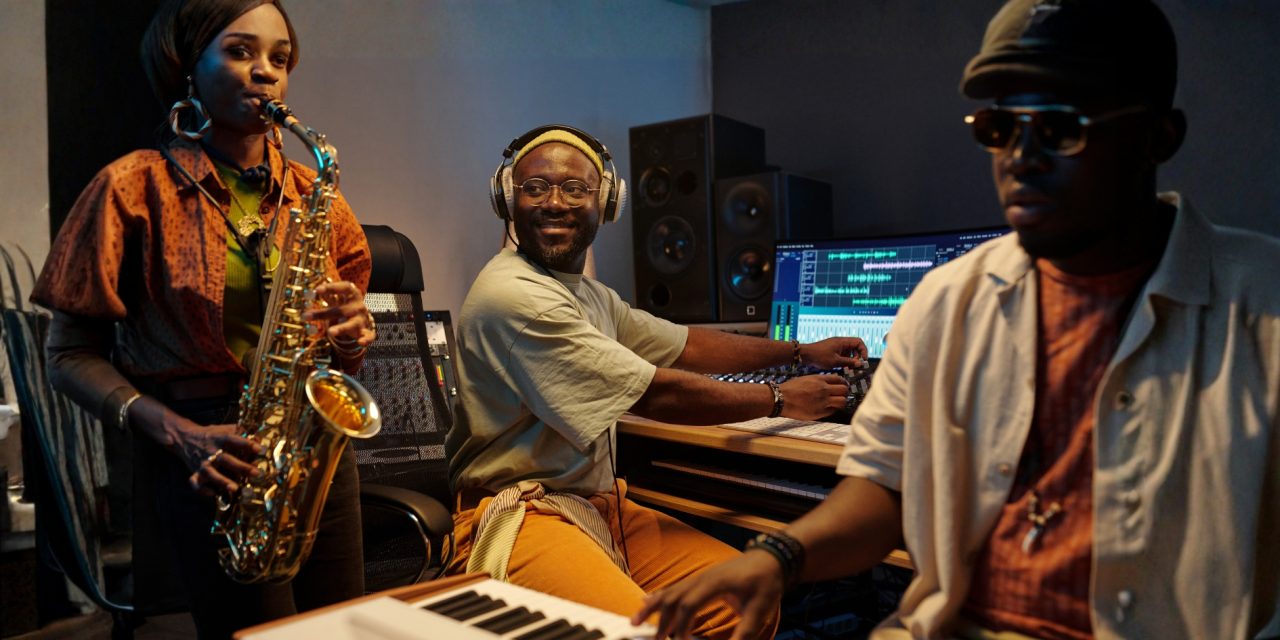
Lounge-jazz collaborations rarely feel rushed, yet somehow they’re now being created faster—and farther apart—than ever before. A pianist in Paris, a producer in Berlin, and a saxophonist recording between coffee breaks can end up on the same track without ever sharing a studio, or even a timezone.
That’s not an accident. Technology has quietly reshaped how lounge-jazz artists connect, experiment, and release music, without stripping away the genre’s relaxed, intimate feel. From digital workspaces to streaming platforms that reward cross-genre blending, modern tools now support collaboration without interrupting the flow that lounge music depends on.
Digital Production Tools and the New Lounge Workflow
Digital production tools have become the backbone of modern lounge-jazz collaborations, enabling artists to work together seamlessly across cities, continents, and time zones. DAWs like Logic Pro X ($199) and FL Studio ($99) allow producers, instrumentalists, and composers to exchange polished drafts without interrupting creative momentum.
Beyond DAWs, collaboration platforms such as Splice and Soundtrap have reshaped how lounge projects evolve. Splice offers a shared ecosystem of samples, loops, and project files. This makes it easy for collaborators to build upon each other’s ideas without version confusion. Soundtrap extends this further. It provides an online workspace where multiple contributors can edit a track simultaneously, complete with integrated chat features that keep creative conversations flowing.
For lounge-jazz artists, this means ideas can stay fluid. A bassist can drop in a late-night groove, a keyboardist can adjust harmonies the next morning, and a producer can fine-tune textures without scheduling studio time. The result is a collaborative process that feels organic, flexible, and aligned with the genre’s relaxed ethos.
Streaming Platforms and the Expansion of Lounge Collaborations
Streaming platforms have fundamentally transformed how lounge-jazz collaborations reach audiences, turning niche partnerships into globally discoverable experiences. Platforms like Spotify and Apple Music make it easier than ever for artists to collaborate across genres such as jazz fusion, ambient, and downtempo, while still finding listeners who value subtlety and mood.
A notable example of technology-driven collaboration success is the 2020 track “Savage Love” by Jawsh 685 and Jason Derulo. The song surpassed one billion streams and demonstrated how digital platforms can amplify cross-border creativity. While lounge-jazz collaborations may operate on a quieter scale, they benefit from the same mechanics. These are playlist placement, algorithmic discovery, and audience crossover.
Tools like Spotify for Artists further enhance collaboration dynamics. They offer data insights, shared release planning, and visibility into listener behavior. Curated playlists dedicated to collaborative projects often boost reach significantly, with studies showing up to a 60% increase in streaming numbers for tracks featuring multiple artists. For lounge musicians, this interconnected system encourages experimentation while expanding audience reach without compromising artistic integrity.
Conclusion
Technology hasn’t rushed lounge-jazz collaborations—it’s refined them. By removing logistical barriers, digital tools allow artists to focus on texture, mood, and musical conversation rather than coordination headaches. Streaming platforms then carry those collaborations beyond local scenes, introducing global audiences to sounds that still feel intimate and unforced.
As lounge-jazz continues to blur genre lines and geographic borders, technology remains a quiet partner in the background—supporting creativity without stealing the spotlight. The result is a collaborative culture that feels both modern and timeless, grounded in ease, experimentation, and shared musical language.
Have you ever discovered a lounge or jazz collaboration that surprised you with how seamlessly it came together? Explore more insights into modern collaborations, curation, and lounge culture only on DLK Lounge.
