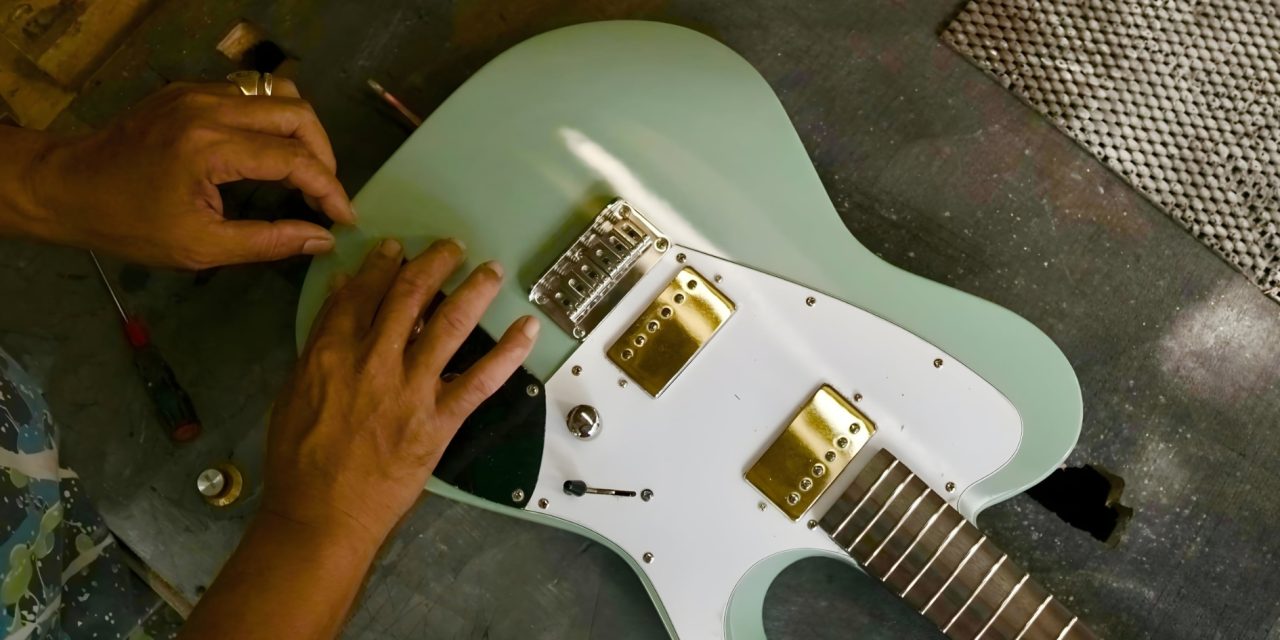
Tone isn’t just shaped by your fingers, your pickups, or your amp settings. It travels through everything in your signal chain.
When gear maintenance slips, tone quietly suffers. Signal degradation doesn’t announce itself dramatically — it creeps in. High frequencies dull. Bass response softens. Noise increases. What once sounded crisp and articulate begins to feel slightly muted, slightly unfocused.
Research and field testing consistently show that oxidized connectors, dust buildup, and worn cables contribute to high-frequency rolloff and increased resistance over time. The result? Less clarity, more noise, and that frustrating sense that your tone “just isn’t hitting like it used to.”
Maintenance isn’t an obsession. It’s preservation.
The Hidden Damage of Dust, Corrosion, and Mishandling
Dust and oxidation are silent tone killers.
Dust accumulation inside input jacks and pedal switches increases capacitance and can dull high frequencies — especially in TS and TRS cables. Sweat and stage grime accelerate buildup, particularly around frequently handled pedals.
Oxidation raises contact resistance. In humid environments, metal connectors can develop patina, weakening signal integrity and increasing intermittent drops.
Here’s what to watch for:
- Crackling when moving cables
- Sudden volume dips
- Loss of high-end clarity
- Increased ground hum or EMI interference
Mishandling during gigs adds another layer of damage. Tight cable wrapping, sharp kinks, and stepped-on connectors create micro-fractures in internal wiring. Over time, solder joints weaken and shielding frays — introducing noise and reducing bass response.
Environmental Factors That Quietly Alter Your Sound
Humidity is particularly destructive. It accelerates corrosion in connectors and compromises shielding. Improper cable storage can cause rubber insulation to crack, exposing internal wiring to interference.
Power supplies also play a role. Voltage instability can introduce unwanted noise or subtle tone loss across your pedalboard. Even poorly organized boards can stress cables, increasing wear at connection points.
Preventative habits make a measurable difference:
- Use compressed air to remove dust from jacks
- Clean connectors with isopropyl alcohol or deoxidizing contact cleaner
- Store pedals in gig bags with silica gel packs
- Wrap cables loosely using the over-under method
- Inspect solder joints and plugs monthly
These small practices preserve frequency response and reduce signal noise before problems compound.
Why It’s Worth the Effort
Your tone is cumulative. Every connector, cable, and power source contributes to what reaches the amp.
Regular maintenance protects clarity, articulation, and dynamic response. It reduces unexpected failures mid-set. It ensures that when something sounds off, you can trust your technique — not question your rig.
Consistency in maintenance builds consistency in sound. And consistency is what lounge music professionals are known for.
Final Takeaway
Great tone isn’t only about upgrading gear — it’s about maintaining what you already own. When you protect your signal chain from dust, corrosion, and wear, you preserve clarity, headroom, and reliability. Small habits compound into better performances.
Maintenance isn’t glamorous, but it is foundational. The musicians with the most consistent sound aren’t always the ones with the most expensive rigs — they’re the ones who take care of them.
When was the last time you inspected your cables and connectors? Explore more performance-driven insights and gear wisdom at DLK Lounge, where serious musicians protect their sound.
