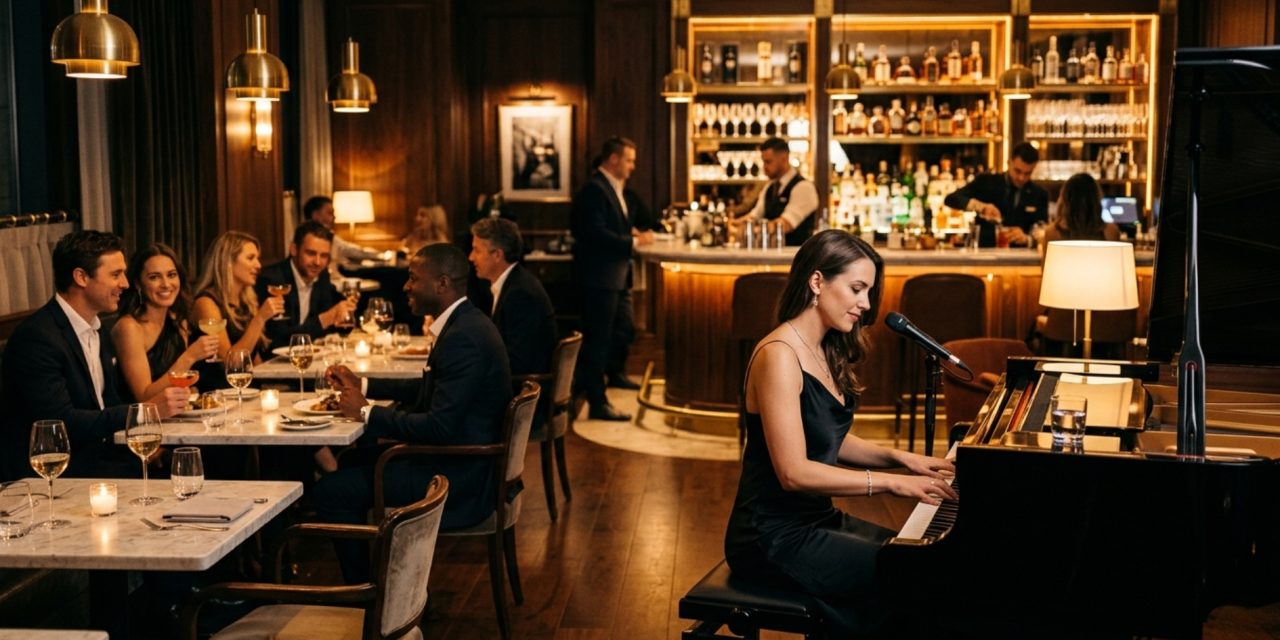
If you are serious about playing lounge music consistently, not just occasionally, then high-end restaurants and bars are where things start to become predictable in the best way. This is not about chasing one-off gigs. It is about stepping into spaces where live music is part of the atmosphere, night after night.
In the first part, we looked at foundational gig pathways. Here, the focus shifts to one of the most reliable lanes: upscale dining spaces that depend on music to shape the experience. These venues are not looking for volume or flash. They are looking for control, taste, and the ability to enhance a room without interrupting it.
Place 2: High-End Restaurants and Bars
High-end venues such as Ocean Prime or CUT by Wolfgang Puck book lounge musicians consistently, often paying between $250 and $500 per night. The expectation is not a “performance” in the traditional sense—it is atmosphere management.
Lounge music in these settings lives in the space between presence and subtlety. A well-played jazz progression or a soft bossa nova rhythm can elevate the entire dining experience without ever pulling focus from conversation. That is exactly why these venues invest in live musicians.
More importantly, many of these spots prefer repeat performers. Once a musician proves they can maintain the right tone, volume, and flow, they often get called back. Over time, this can turn into steady weekly or monthly residencies, especially during peak dinner hours between 6 and 9 p.m.
For lounge musicians, this is where consistency meets craft. The ability to read the room—adjusting tempo, dynamics, and even song choice in real time—is often more valuable than technical showmanship.
Finding Opportunities
Breaking into these spaces requires a mix of visibility and direct outreach. Platforms like GigSalad and BandMix are useful starting points, especially when filtered for piano bar or lounge-style gigs. They provide access to active listings and help you connect with venues already looking for that specific sound.
At the same time, some of the best opportunities never get posted publicly. This is where a more hands-on approach comes in. Browsing restaurant listings on platforms like OpenTable or Yelp can help you identify venues that already feature live music. From there, reaching out directly—whether by phone or social media—often leads to more meaningful conversations.
Instagram, in particular, has become a quiet but powerful booking channel. Many restaurants maintain music-specific pages or regularly post about live sets. A well-timed, thoughtful message can open doors that formal applications might miss.
The key is consistency. Tracking venues, following up, and staying visible within local circuits often reveals opportunities before they become widely known.
Crafting Your Pitch
In high-end settings, your pitch matters just as much as your playing. Venue managers are not just hiring a musician—they are choosing someone to shape part of their guest experience.
A strong approach is simple and direct. A short phone introduction that connects your style to the venue’s atmosphere works far better than a generic message. Referencing their ambiance, reviews, or existing music style shows that you understand their space.
For example, highlighting how your smooth jazz or bossa nova sets support a relaxed dinner service immediately positions you as a fit. Mentioning past experiences—especially where your music improved guest feedback or stayed consistent during busy hours—adds credibility.
Visual proof helps as well. A concise demo reel with a few well-recorded performances communicates far more than a long description. The goal is not to impress with complexity, but to demonstrate control, consistency, and taste.
Personalization is what separates a forgettable pitch from one that gets a reply. When a venue feels like you understand their identity, they are far more likely to give you a chance.
Conclusion
Finding lounge gigs in 2026 is less about chasing exposure and more about positioning yourself where music already matters. High-end restaurants and bars offer that space—steady, refined, and built around atmosphere.
When you approach them with the right mindset and preparation, they become more than gigs. They become long-term opportunities to grow, connect, and refine your sound in real-world settings.
Are you playing to be noticed—or playing to create an atmosphere people want to stay in?
Let us know in the comments, and keep building your lounge music journey only at DLK Lounge!
