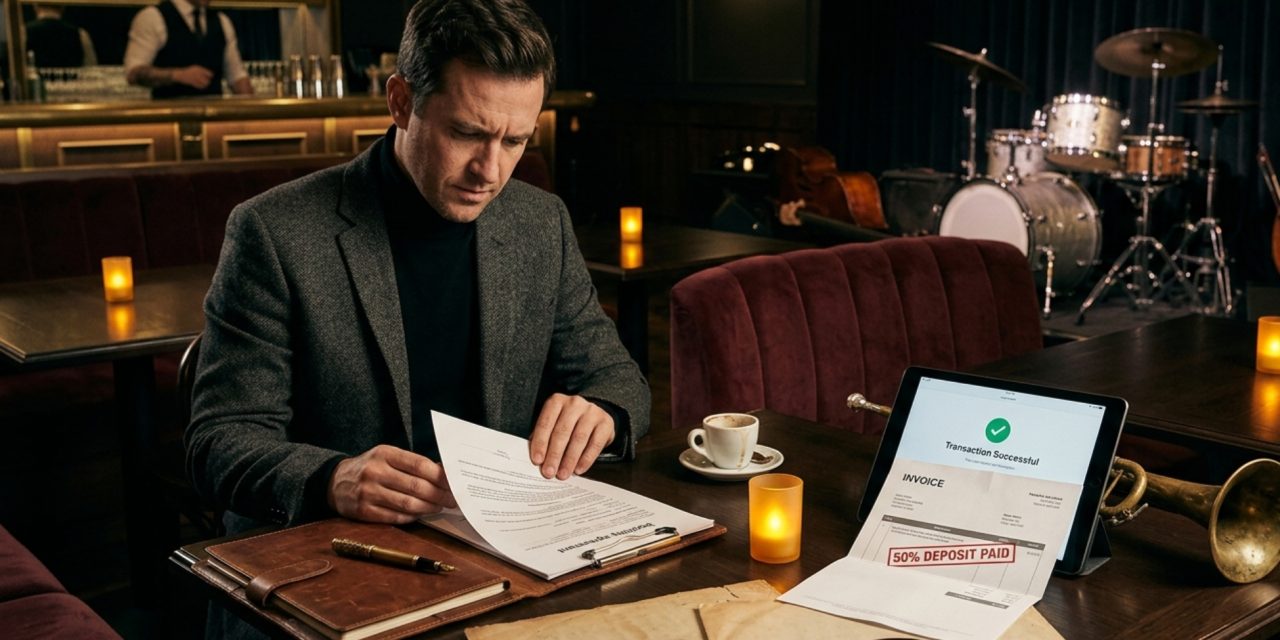
In lounge music, everything feels effortless. The timing is relaxed, the sound is smooth, and nothing feels rushed. But that ease is built on quiet discipline. Nothing important is left undefined.
Your booking process should follow the same principle. If the commitment is unclear, the session will be too.
A project is not confirmed because it sounds good in conversation. It is confirmed when it is secured. Deposits do that. They turn interest into something you can actually schedule, prepare for, and deliver without second-guessing.
And just like a loose groove throws off a set, a loose agreement throws off your entire workflow.
Why Deposits Matter for Your Lounge Workflow
Deposits are not just business. They are structure behind the vibe.
A 50% upfront deposit is standard because it locks the date and covers your preparation—whether that is arranging a lounge set, planning a recording session, or preparing creative material. For smaller gigs, 30% still creates commitment without overloading the client.
Clients who pay upfront are ready to move. Those who hesitate often are not fully decided. That single step filters out uncertainty before it costs you time.
In lounge-related work—live sets, studio sessions, curated events—your time is tied to atmosphere and presence. You cannot double-book that. Deposits ensure that once a slot is held, it is respected.
Your terms should always be clear and written:
- 30–50% deposit upfront
- Defined due date
- Non-refundable clause
- Balance due before delivery or at a set milestone
Clarity here keeps the process as smooth as the music you are trying to create.
How to Collect Deposits Without Disrupting the Flow
A good system should feel like part of your rhythm, not a break in it.
Start with a simple agreement or gig packet that outlines the scope and deposit terms. Once approved, send an invoice immediately using tools like Stripe or PayPal. Keep it clean and direct.
Your process should be consistent:
- Invoice with a clear deposit line item
- Automatic reminders (e.g., net 15)
- Confirm payment before starting
- Track using invoice numbers and client details
For international lounge bookings or collaborations, always specify currency and exchange terms. It avoids unnecessary friction later.
This is the business equivalent of keeping time. When it is steady, everything else flows naturally.
Common Deposit Structures for Creative and Lounge-Based Work
A clear deposit policy removes hesitation and builds trust. It should define the percentage, confirm it is non-refundable, and show how it applies to the full project.
Typical structures include:
- Design or Creative Direction: 50% upfront, balance on final approval
- Consulting or Music Direction: 30% upfront, balance at milestones
- Live Lounge Events or Sessions: 50% upfront, balance after completion
Example:
“50% deposit due upon signing, remaining balance due upon delivery.”
For larger lounge productions or recurring gigs, milestone payments work best. They keep both sides aligned as the project progresses.
Always include this in your scope of work. When expectations are clear, the working relationship stays smooth.
Conclusion
Deposits are not about being rigid. They are about being prepared.
They secure your time, confirm your client’s intent, and give your workflow the same quiet structure that defines great lounge music. Nothing forced, nothing rushed—just clear and intentional.
Once that is in place, you can focus fully on delivering the kind of work that feels effortless on the surface, but is solid underneath.
Have you ever reserved time for a client who felt certain, but never actually committed?
Stay with DLK Loungefor more ways to turn interest into real commitment before you block your time.
