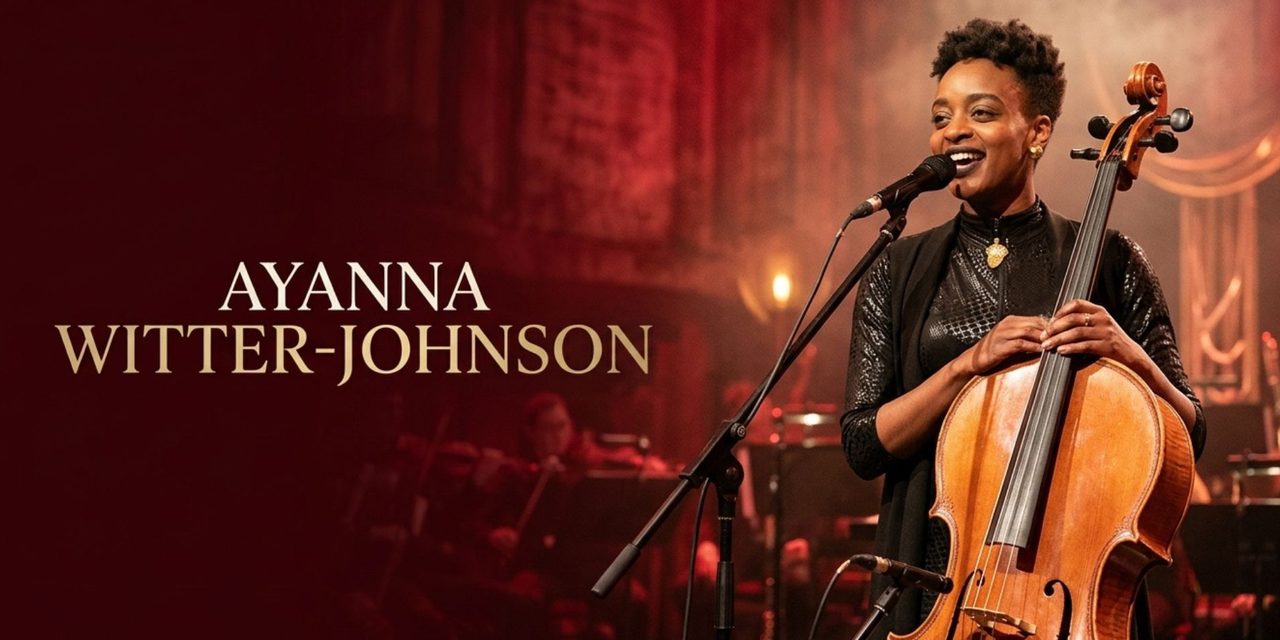
Ayanna Witter-Johnson is one of five composers receiving a 2026 Paul Hamlyn Foundation Award for Artists. The Foundation announced the recipients on November 4, 2026, at an event in central London. Each composer and five visual artists will receive £75,000.
For listeners drawn to the meeting points of jazz, soul and contemporary song, the recognition offers an introduction to Witter-Johnson’s musical world. Her practice centres voice and cello, alongside songwriting, piano and orchestral composition.
Recognition That Creates Room to Develop
The Paul Hamlyn Foundation Award provides funding without prescribing a particular creative outcome. Recipients decide how to use the support for their artistic development.
Peers nominate artists, while a judging panel makes the final decisions. The Strad’s report identifies Witter-Johnson among this year’s composer recipients.
The other recipients are Olivia Chaney, Bushra El-Turk, Charlotte Keeffe and Daudi Matsiko.
That freedom is an important part of the award’s significance. Making music involves exploration, revision and collaboration beyond the finished performances audiences eventually hear.
We cannot know how Witter-Johnson will allocate the funding. However, the award gives her room to make those creative decisions independently.
Where Voice and Cello Meet
The Foundation’s recipient profile describes Witter-Johnson’s work across classical music, jazz, Caribbean traditions, soul and contemporary song.
It highlights the cello as both a melodic and rhythmic foundation, while her voice carries the storytelling. This relationship provides an interesting starting point for listeners exploring her musicianship.
Rather than treating the cello simply as an accompanying instrument, consider the different roles it can occupy. Is it establishing movement, answering a vocal phrase or carrying a melody independently?
These questions offer ways into the relationship between two musical voices without requiring specialist knowledge. They also encourage closer attention to how instrumentation and storytelling can work together.
A Musical Practice That Moves Between Settings
The Foundation highlights FAIYA!, performed by the London Symphony Orchestra under Sir Simon Rattle. It also identifies Ocean Floor, created with the orchestra’s Percussion Ensemble.
These works connect rhythmic ideas and melodic storytelling with orchestral and song-based approaches. They provide another perspective on Witter-Johnson’s work beyond her voice-and-cello performances.
Her recording practice also runs alongside her composition work. This movement between musical settings helps explain why a single genre label offers only a partial introduction.
A song, an ensemble performance and a larger commissioned composition present different creative possibilities. Yet they can share questions about melody, rhythm, storytelling and musical expression.
An Invitation to Listen Beyond Genre Labels
For jazz and soul listeners, Witter-Johnson’s recognition allows the exploration of musicianship across familiar boundaries. Her work brings together instrumental expression, vocal storytelling and compositional approaches.
Start by following the exchange between voice and cello. Notice how rhythm supports the musical narrative and how different instrumental roles shape the listening experience.
The Paul Hamlyn Foundation Award recognizes her ongoing creative practice instead of a single recording or performance. For listeners, it opens a doorway into an artist whose work moves between musical traditions and settings.
What can happen when an artist refuses to be confined to one musical tradition? Explore more stories of boundary-crossing musicianship and creative expression only at DLK Lounge.
