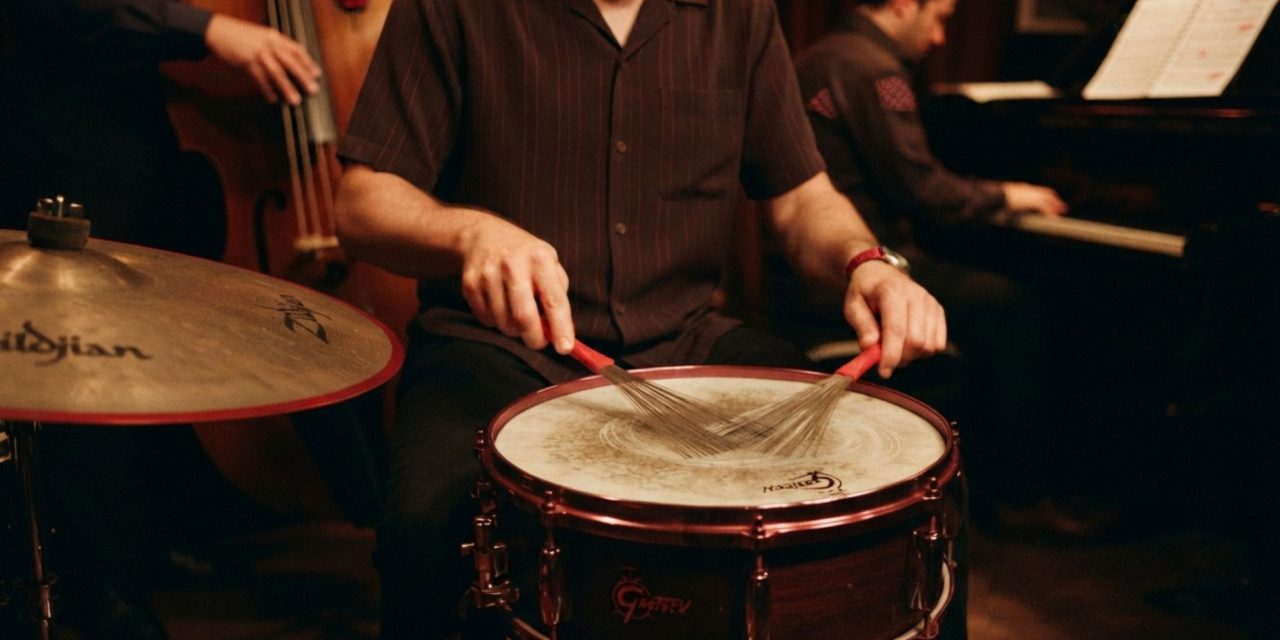
Jazz drums can sound too loud for an intimate ballad or a quiet late-night session. Switching to lighter sticks might seem like the obvious solution, but brushes offer something entirely different.
Jazz brushes transform the drums into a softer, more expressive instrument. Rather than producing sharp strikes, they create delicate textures, gentle swishes, and a continuous sense of movement. That distinctive sound helps drummers maintain the groove without overpowering other musicians.
A jazz brush consists of a handle fitted with thin metal wires or nylon bristles. These spread outward into a flat, fan-shaped paddle. Unlike a drumstick, which concentrates force at one point, a brush distributes contact across the drumhead.
The result is a softer, more diffuse sound with a characteristic hiss. It feels closer to a whisper than a crack.
Drummers began using brushes during the early swing era, particularly in smaller, more intimate settings. Ballads, hotel dance floors, and late-night sessions needed low dynamics without sacrificing the swing feel.
How Brush Technique Differs From Sticks
Drumsticks depend on rebound and sharp impact. Brushes require continuous, sweeping movements that draw sound from the drumhead through friction.
There is no bounce to rely on. Instead, the sound comes from controlled movement, pressure, and patience.
Most brush playing begins on the snare drum with a circular motion. One hand sweeps clockwise while the other moves counterclockwise. Together, these movements create a steady wash called legato articulation.
Legato articulation produces a smooth, connected texture with almost no gaps between notes. It gives the snare a continuous, almost breathing quality.
Against this flowing background, the other hand introduces rhythmic accents. Tap strokes and short, side-to-side swishes create staccato articulation. These sharper movements add crisp rhythmic details without interrupting the overall texture.
Another common technique is the figure-eight pattern. The drummer traces a looping path across the drumhead, keeping both hands moving continuously.
Because brushes lack the natural rebound of sticks, the wrists and forearms do most of the work. Keep the wrist relaxed and allow the brush to glide rather than press.
A useful practice exercise starts with slow circles on the snare. Aim for an even, uninterrupted sound before introducing accents.
How Brushes Change the Ride Cymbal Sound
Brush technique also changes how drummers approach the ride cymbal. Stick players typically strike its surface to establish individual notes.
Brush players often sweep instead, dragging the bristles across the metal. This creates a shimmering wash that supports the swing feel without overpowering the upright bass or jazz piano.
Listen closely the next time you hear a piano trio. The snare carries a soft, swirling texture, while the ride cymbal seems to breathe rather than ring.
That quiet rhythmic foundation is brush technique doing its job. It holds the timekeeping and groove together without demanding attention.
Classic Recordings That Showcase Brush Work
Some of jazz’s most enduring recordings feature brush work that helps define their atmosphere. From smoky ballads to breezy bossa novas, the technique adds character without dominating the music.
In each recording, the drummer performs a subtle but essential role. The brushes shape the pulse, complement the harmony, and establish the emotional atmosphere.
When the technique works well, you might barely notice it. Then you realize the entire arrangement depends on that quiet contribution.
Listening to classic recordings is one of the fastest ways to develop your ear. You begin recognizing circular sweeps, crisp tap strokes, and the expressive possibilities of low dynamics.
A jazz trio depends heavily on this kind of dynamic control. Brushes give drummers an especially expressive way to maintain balance.
The following recordings span several decades and musical styles. However, they share one important characteristic: the drums never need to shout.
Instead, they converse with the other instruments. Listen for the breathing snare, shimmering ride cymbal, and nearly invisible bass drum. Each contributes to a groove that feels effortless but remains carefully controlled.
Ballads, Bossa Nova, and Late-Night Trio Sessions
From intimate jazz ballads to gentle bossa nova rhythms, brushes help establish the mood. The techniques change with each style, revealing just how versatile these seemingly simple tools can be.
Start with Johnny Smith’s “Moonlight in Vermont“ from 1952. The guitar carries the melody, while the accompanying brushwork demonstrates beautiful legato articulation.
Listen for the long, circular sweeps across the snare drum. They create a soft haze rather than a clearly defined beat.
Notice how the drummer uses very few accents. The effect resembles fog settling over a lake. Nothing sounds sharp, yet everything glows.
Next, explore João Gilberto’s “Chega de Saudade“ from 1959. Here, bossa nova brushes sound lighter and more clipped than their ballad counterparts.
The sweeping movement remains, but the strokes are shorter and more controlled. They often accompany gentle taps against the snare rim.
The guitar’s syncopated rhythm takes center stage, leaving the drums to provide subtle support. Notice how the brushes seem to float rather than push.
The groove is implied rather than declared. That restraint is central to the recording’s relaxed character.
For trio playing, turn to Bill Evans’s “Waltz for Debby“ from 1961. Recorded live at the Village Vanguard, it features Paul Motian’s remarkably conversational brush work.
His circular snare movements create a continuous whisper beneath the performance. Meanwhile, the ride cymbal contributes a faint metallic shimmer.
The bass drum remains barely audible, yet its pulse is still present. This demonstrates how quiet volume can become an artistic choice rather than a limitation.
Oscar Peterson’s trio recordings from the 1950s and 1960s offer another perspective. On faster swing numbers, the brushes move more rapidly, and the tap strokes become increasingly defined.
The result resembles a shuffle rhythm played against a pillow. The sound remains soft but carries considerable rhythmic energy.
Ahmad Jamal’s trio recordings provide another excellent example. His work on “Poinciana” from 1958 demonstrates how repetitive brush patterns can become hypnotic.
The circular motion continues throughout, but subtle changes in pressure and speed keep the rhythm alive.
What to Listen For in Different Jazz Styles
These recordings reveal how brush technique adapts to different musical settings. Pay attention to the following characteristics when listening:
- Ballads: Long, continuous swirls with minimal attack. The snare resembles soft rain.
- Bossa Nova: Shorter sweeps accompanied by light taps. The rhythm feels like a gentle tide rather than a crashing wave.
- Late-Night Trio Sessions: Circular snare movements, faint ride cymbal, and almost no bass drum. You feel the pulse more than you hear it.
Across all these styles, the drummer uses brushes to serve the music rather than demonstrate technical ability. That restraint is precisely what makes the technique so expressive.
The next time you play one of these recordings, try isolating the snare drum in your listening. You may discover a quiet rhythmic conversation that was always there.
Understanding brush technique also changes how you appreciate jazz arrangements. What initially sounds like background texture becomes an essential part of the performance. Sometimes, the smallest sounds hold an entire musical conversation together.
How much of your favorite jazz recording’s atmosphere comes from something you barely notice? Explore more listening insights and jazz appreciation features only at DLK Lounge, where the subtle details behind great jazz deserve their own spotlight.
