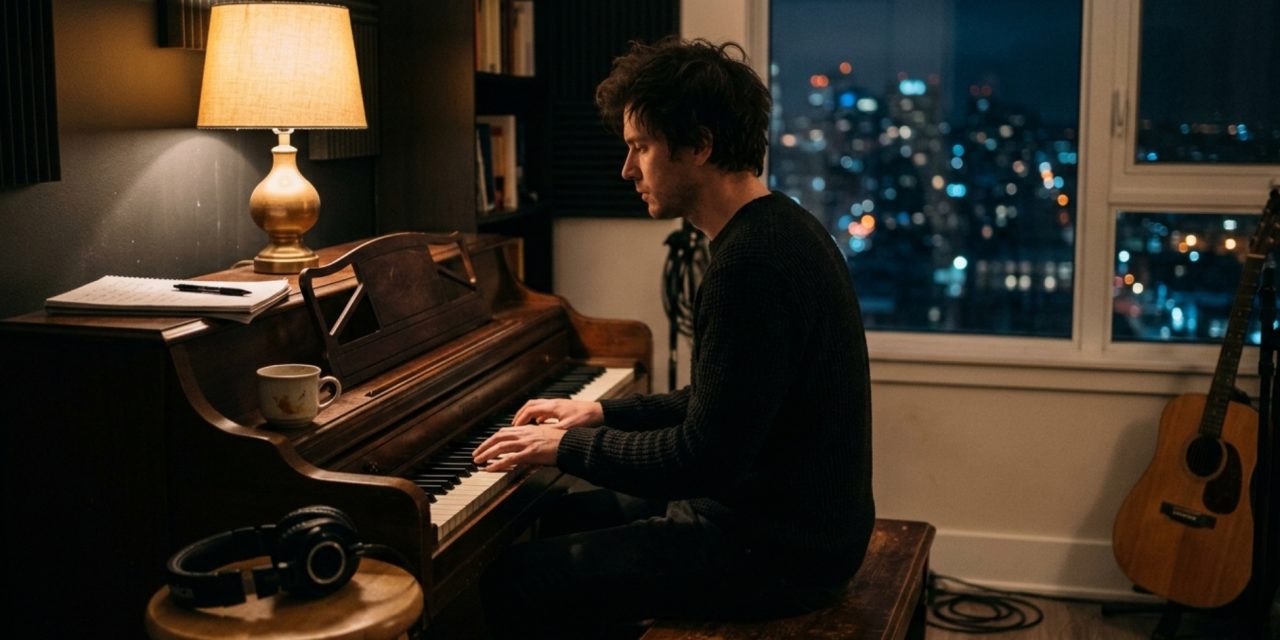
Not every track needs to say a lot to mean something. In lounge music, sometimes the quietest moments carry the most weight.
That soft, introspective mood you hear in late-night sets or chilled playlists isn’t accidental. It’s built through restraint—fewer notes, slower pacing, and chords that linger just long enough to make you feel something. Think of the emotional pull in tracks like Exit Music (For a Film) by Radiohead—not lounge exactly, but the feeling translates.
For producers working in soul-infused lounge, the goal isn’t complexity. It’s the atmosphere.
Using Chords and Tempo to Set the Mood
Melancholic lounge starts with harmony. Minor chords—especially softer, extended ones—naturally lean toward nostalgia and reflection. But it’s not just the chord choice; it’s how you play them.
Slower tempos, usually around 80–100 BPM, give chords room to breathe. Instead of rushing through progressions, let them sit. Let the listener absorb the emotion before moving on.
Simple progressions like Cm7 to Fm7 to BbMaj7 create a smooth, reflective flow without feeling heavy. You don’t need dense layers—just a few well-chosen sounds that complement each other. A warm piano, a soft pad, maybe a subtle bassline—that’s often enough.
The real trick is intention. Every chord should feel like it belongs there, not just filling space.
Letting Space Do the Work
Here’s where most producers overdo it. Lounge thrives on space, not constant sound.
Leaving gaps between notes allows the track to breathe. Long sustains, gentle reverb tails, and minimal percussion create that floating, late-night feel. Instead of stacking layers, focus on what happens between the sounds.
Think of it like a conversation. If everything talks at once, nothing stands out. But when there’s space, every note feels more important.
Even subtle choices—like letting a piano chord ring out or adding a delayed echo—can completely change the mood. You’re not just building a track; you’re shaping a moment.
Conclusion
Melancholic lounge music isn’t about doing more—it’s about doing less, better. Thoughtful chords, slower pacing, and intentional space can turn a simple idea into something deeply immersive.
For soul-influenced producers, this approach feels natural. It leans into emotion, groove, and atmosphere without forcing complexity. And when done right, it creates music that doesn’t just play—it lingers.
Do you prefer lounge tracks that stay minimal and emotional, or ones that build into something fuller over time?
Let us know in the comments and keep exploring soulful, late-night sounds only at DLK Lounge!
