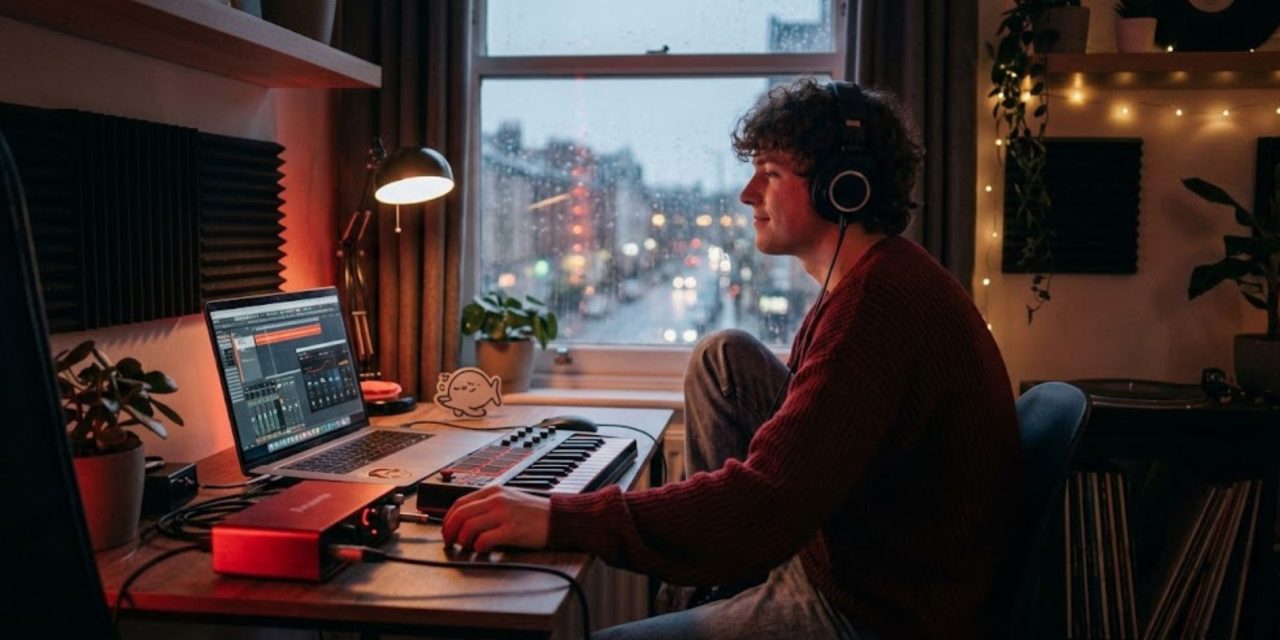
Quiet music has an unusual problem: it has to hold your attention without demanding it. That sounds simple until you try making a track where a soft piano note, a little tape hiss, and several seconds of space are doing most of the emotional heavy lifting.
Sleepy Fish has built much of his appeal around exactly that tension. His music blends lo-fi, ambient, chillhop, and cinematic textures into soundscapes that can sit comfortably behind a study session yet still feel like they belong in a film. His work offers an interesting case study in how restraint, texture, and atmosphere can make understated music feel surprisingly expansive.
The Cinematic Magic of Quiet Music
Sleepy Fish’s music rarely depends on a huge arrangement to create atmosphere. Instead, the tracks tend to build their character through texture, repetition, space, and gradual movement.
That approach gives quiet music room to breathe. A gentle melody can sit alongside environmental sounds, soft percussion, distant guitar, or hazy synths without everything competing for attention. The result feels less like a conventional song demanding to be followed and more like a world the listener can step into.
His sound sits comfortably between several musical traditions. Lo-fi contributes its warmth and imperfections, ambient music supplies the spaciousness, while cinematic influences give the arrangements a sense of movement and emotional scale.
That combination helps explain why this kind of music works so well for study sessions, late-night listening, rainy afternoons, and other moments when listeners want atmosphere without overwhelming vocals or aggressive production.
What Makes It Feel Cinematic?
The cinematic quality comes largely from contrast.
Soft melodies become more noticeable when surrounded by silence. A distant sound feels larger when the rest of the arrangement remains restrained. A gradual swell can create emotional impact without needing a dramatic chorus.
Several characteristics repeatedly contribute to this effect:
- Sparse melodies that leave room for other textures.
- Layered ambient sounds that give the music a sense of place.
- Reverb and delay that create distance and depth.
- Gentle dynamic changes that keep tracks moving.
- Minimal percussion that provides momentum without taking over.
This is where Sleepy Fish’s approach becomes particularly interesting. The music may sound effortless, but that sense of ease comes from knowing what not to add.
From Bedroom Production to a Recognizable Sound
Sleepy Fish’s story also reflects the accessibility of modern music production.
Like many independent producers working in the lo-fi and chillhop space, his music grew from a relatively personal production environment rather than a traditional studio system. Early influences from artists such as Tycho, Bonobo, and Boards of Canada helped shape an interest in atmospheric beats, electronic textures, and instrumental storytelling.
That foundation eventually developed into a recognizable blend of mellow rhythms and cinematic sound design.
His growth also reflects the changing way listeners discover instrumental music. Streaming playlists and online communities have created an enormous audience for music that might once have been considered too quiet, too atmospheric, or too niche for mainstream radio.
For bedroom producers, that shift is significant. A small setup can now become the starting point for music heard by listeners around the world.
The Sound Design Behind the Atmosphere
One of the most important elements in Sleepy Fish’s music is texture.
Rather than treating every sound as something that needs to be clean and prominent, this style allows different elements to occupy different depths. A piano might sit close to the listener while a field recording seems to come from somewhere in the distance. A soft synth can fill the background without becoming the main event.
That layering creates depth without requiring a huge arrangement.
Field recordings are especially useful for this approach. Sounds associated with rain, water, streets, rooms, or nature can immediately suggest a setting. Combined with reverb, gentle melodies, and lo-fi imperfections, they make an instrumental track feel as though it exists somewhere beyond the speakers.
The trick is restraint. Add too many textures and the atmosphere becomes clutter. Remove too much and the track can feel empty rather than spacious.
Sleepy Fish’s appeal lies in that middle ground, where every sound seems to have enough room to exist.
Layering Without Losing the Quiet
A cinematic lo-fi arrangement does not need dozens of competing parts.
A producer might begin with a simple melodic idea, then gradually introduce:
- A soft environmental recording.
- A subtle rhythmic layer.
- A distant harmonic texture.
- A restrained bassline.
- Reverb or delay that connects the elements.
- Small changes in volume or texture to create movement.
The individual sounds can remain understated while their combination creates something much larger.
This is one reason Sleepy Fish’s music can feel almost visual. Rather than telling listeners exactly what to feel, the arrangement gives them enough sonic detail to construct their own setting.
Silence Is Part of the Arrangement
Perhaps the most overlooked ingredient in atmospheric music is the space between sounds.
Silence does not necessarily mean stopping the music completely. It can mean allowing a melody to fade before introducing the next element, leaving a beat deliberately sparse, or letting a reverb tail continue after the original sound has disappeared.
Those gaps create anticipation.
They also prevent the arrangement from becoming emotionally flat. If every second is filled with sound, there is little room for contrast. But when a track alternates between density and openness, even a small melodic change can feel significant.
This principle appears throughout cinematic music, ambient production, and lo-fi. Sleepy Fish brings it into a format that remains accessible and easy to live with.
The music does not have to announce its emotional moments. Sometimes it simply gives them room to arrive.
Albums and the Growth of the Sleepy Fish Sound
Sleepy Fish’s releases demonstrate how this aesthetic can develop without abandoning its central identity.
Projects such as Moonflower Dreams and Aquarium Lullabies explore the same broad territory of mellow beats, atmospheric textures, gentle melodies, and instrumental storytelling.
Across this body of work, the emphasis remains less on traditional song structures and more on creating cohesive listening environments. Individual tracks can work on their own, but they also contribute to a larger mood when heard alongside one another.
That makes the music particularly suited to playlist culture. A listener may discover one track while studying, continue through several more while working, and eventually begin associating the artist’s sound with a particular mood or time of day.
That kind of repeat listening is part of what makes atmospheric instrumental music so powerful. The listener does not always return because they want to hear a specific lyric. They return because they want to feel a particular space again.
Conclusion
Sleepy Fish’s music shows how atmosphere can become the main character of an instrumental track. Through lo-fi textures, ambient layers, restrained melodies, and deliberate use of space, he creates music that feels intimate without becoming small.
His work also reflects a wider shift in how instrumental music is created and consumed. Bedroom producers can develop highly personal sounds, while streaming platforms give atmospheric genres audiences far beyond their traditional niches.
For listeners, the result is music that can accompany an ordinary moment while quietly making it feel like something more.
Want to hear how restraint, texture, and silence can turn a simple track into a cinematic experience? Explore more artist spotlights and deeper music stories on DLK Lounge.
