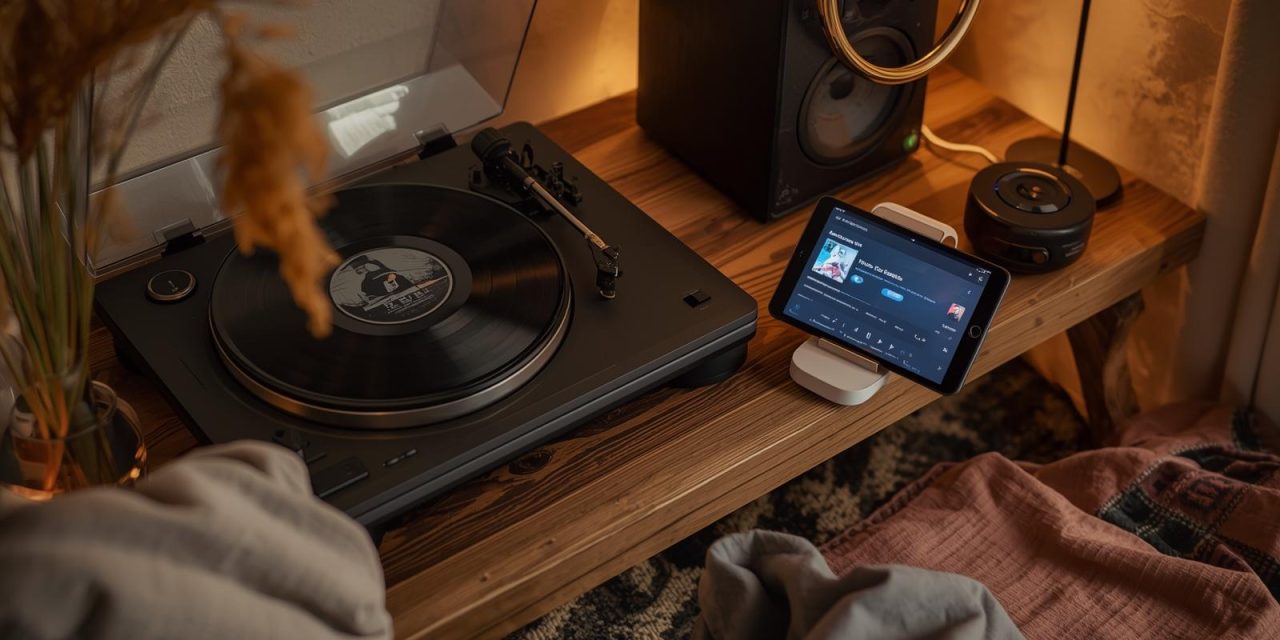
For a generation raised on playlists, it’s easy to forget that music once came with texture. Vinyl crackle, faint room noise, and the soft imperfections of analog sound were part of the experience, not flaws to be removed.
Today’s streaming platforms haven’t erased that nostalgia; they’ve quietly reintroduced it. Modern listeners now move effortlessly between polished studio recordings and tracks that intentionally carry warmth and grain. Streaming services have become spaces where convenience and character coexist, allowing listeners to choose not just songs, but sonic feeling.
Seamless Access to Warm and Polished Sounds
Streaming platforms like Spotify and Apple Music give listeners instant access to both vinyl-inspired textures and pristine studio productions. With a few taps, a listener can shift from crisp, high-definition mixes to tracks layered with subtle crackle and analog warmth. This flexibility has reshaped how people experience music across different moments of the day.
Spotify’s recommendation system plays a major role here. By tracking skips, replays, and listening duration, the platform learns when users lean toward lo-fi warmth or clean digital clarity.
Data trends show that listeners often alternate between these styles, especially during work or relaxation periods. Interestingly, vinyl-inspired tracks tend to hold attention longer, with listeners spending roughly 20 per cent more time before switching. That behavior points to a growing appreciation for texture, not just sound quality.
Curated Playlists and the Return of Texture
Curated playlists blending vinyl crackle with modern production have become central to today’s listening habits. These playlists tap into nostalgia while still fitting seamlessly into digital routines. Spotify’s Lo-Fi Beats is a clear example, pairing soft beats with subtle vinyl noise that feels familiar without sounding dated. Many listeners remain engaged for hours, treating these playlists as sound environments rather than background noise.
Apple Music’s Deep Focus takes a slightly different approach. Its sound leans cleaner and more polished, occasionally layering ambient elements to add depth without distraction. Both approaches succeed because they acknowledge that listeners crave emotional texture alongside clarity. Engagement data reflects this balance, with blended playlists boosting listener retention by around 20%. Texture, it turns out, matters just as much as fidelity.
Conclusion
Streaming services have done more than make music convenient. They’ve expanded how listeners interact with sound itself. By offering both analog warmth and digital precision, platforms now allow music to feel personal, intentional, and emotionally grounded. The quiet crackle of vinyl and the smoothness of modern production no longer compete; they complement each other in shaping how we listen.
Do you reach for vinyl-style warmth when you want to slow down, or polished clarity when you need focus? At DLK Lounge, we explore how sound textures, mood, and modern listening habits come together to shape intentional listening experiences.
