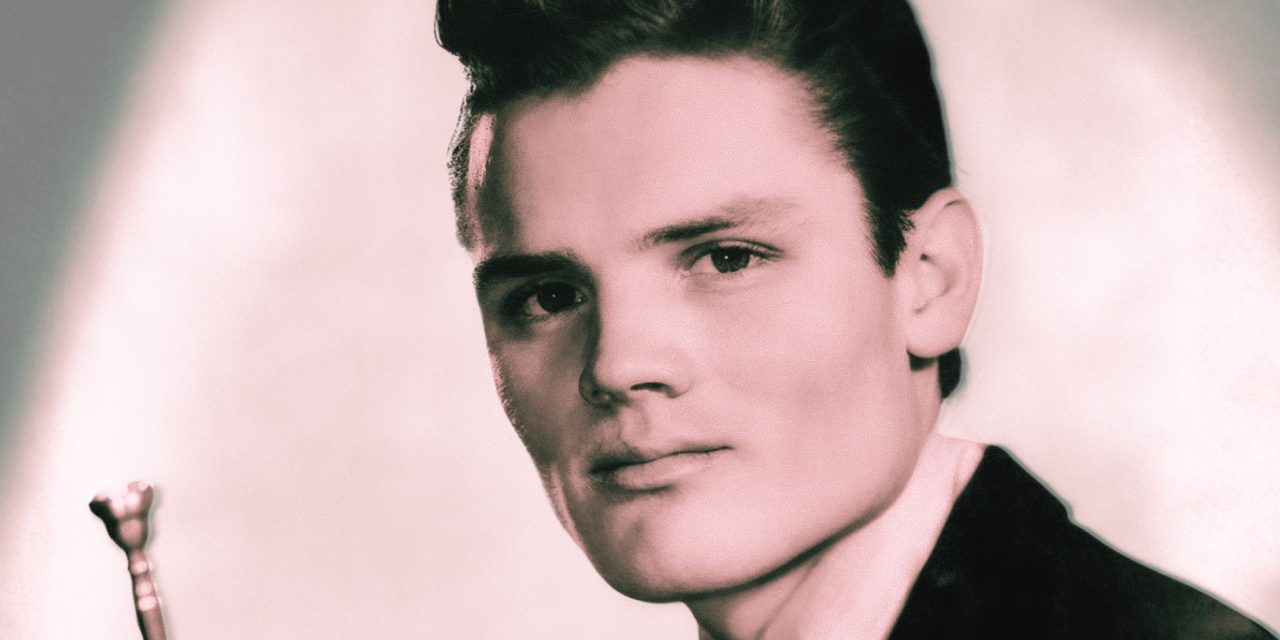
In jazz, louder often wins. Bigger solos, bigger personalities, bigger egos. Chet Baker somehow broke that rule by doing almost the opposite.
He barely raised his voice, rarely overplayed, and yet became one of the most captivating figures in cool jazz. With a whisper-soft trumpet tone and vocals that felt almost painfully exposed, Baker proved vulnerability could hit harder than swagger. This profile traces his swift ascent on the West Coast and the intimate quartet work with Gerry Mulligan.
Early Life and Musical Awakening
Chet Baker began trumpet lessons at age 13 in 1946 after his family moved from Yale, Oklahoma, to San Francisco. There, he absorbed bebop phrasing from Charlie Parker records long before receiving formal training. Even early on, his instincts leaned toward emotional clarity and subtle phrasing rather than technical flash.
At 13, he bought his first trumpet from a local music store in San Francisco and began practicing obsessively. Within a few years, he had developed the soft tone and precise phrasing that would later define his place in the Cool Jazz movement.
By 16, Baker was already landing paid gigs with local combos around San Francisco. These early performances gave him real-world experience and sharpened his understated style. Rather than overpower audiences, he learned how to pull listeners in with restraint.
In 1951, Baker was inducted into the Army at Fort Ord, where he played in the military band and continued developing his skills. After his discharge, he enrolled at Los Angeles City College in 1952 while immersing himself in the rapidly growing West Coast jazz scene.
Around this time, he was discovered at the Lighthouse Café, a venue that would prove pivotal in his career. It was there that he crossed paths with the musicians who would soon change his life.
Discovery and Rise in the West Coast Scene
By 1952, Chet Baker was performing regularly at the Lighthouse Café in Hermosa Beach, where his sound quickly drew attention. Among those listening closely was Richard Bock, founder of Pacific Jazz Records.
The Los Angeles jazz scene was beginning to embrace a different sound—less aggressive than East Coast bebop, more spacious and melodic. Baker fit perfectly into that world. His muted trumpet, lyrical improvisation, and effortless phrasing captured the essence of West Coast cool.
What made Baker stand out was not speed or complexity. It was his use of space. He let notes breathe. He trusted silence. That minimalist approach felt refreshing at a time when jazz often celebrated intensity and technical fireworks.
Soon, he moved beyond sideman roles and started receiving featured billing. Club attendance rose on nights he performed, and his reputation spread quickly through the California jazz circuit.
Meeting Gerry Mulligan and the Quartet
Baker’s first session with Gerry Mulligan took place in October 1952 at The Haig in Los Angeles. There, they recorded Bernie’s Tune and Lullaby of the Leaves for Pacific Jazz Records, with Carson Smith on bass and Chico Hamilton on drums.
The chemistry was immediate.
Without piano, the quartet created a remarkably open sound. Instead of rigid arrangements, their music felt conversational. Mulligan and Baker seemed to speak to each other through their instruments, weaving melodies with stunning fluidity.
The group held a residency at The Haig from October through December 1952, refining their sound night after night. The intimate venue encouraged subtle playing and close listening, which perfectly suited Baker’s style.
Pacific Jazz Records recorded several sessions during this period, capturing the quartet’s evolution. These recordings helped establish the quartet as one of the defining groups of the Cool Jazz era.
When Mulligan was arrested in January 1953, Baker suddenly found himself stepping into a leadership role. It was a pivotal moment.
With Russ Freeman joining on piano, Baker led sessions in early 1953 that produced classics like My Funny Valentine and Five Brothers. These recordings would further cement his reputation and reveal just how powerful his emotional restraint could be.
Conclusion
Chet Baker did not redefine cool jazz through force. He did it through vulnerability. His playing carried a rare emotional openness: soft, intimate, and quietly devastating.
Even in his early years, the elements that made him unforgettable were already present: lyrical phrasing, emotional honesty, and an ability to make every note feel deeply personal. His rise on the West Coast and work with Gerry Mulligan laid the foundation for a legacy that still influences jazz musicians today.
And this is only the beginning of Baker’s story.
What was it about Chet Baker’s sound that felt so hypnotic—his trumpet tone, his phrasing, or something even harder to define?
Stay tuned to DLK Lounge next, we’re diving into the signature style of Chet Baker and uncovering exactly what made his sound so hauntingly unforgettable.
