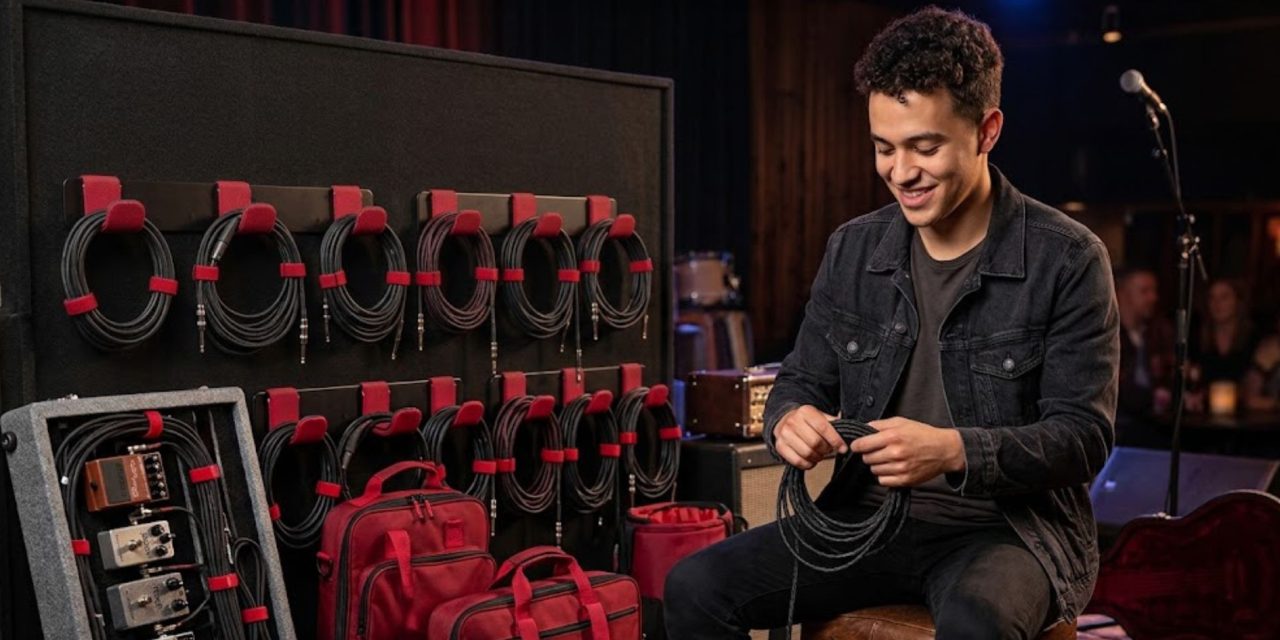
Your cables may not make the music, but they can certainly get in the way when they’re tangled, damaged, or suddenly refusing to cooperate.
Good cable storage for lounge artists is less about having a perfectly organized gear room and more about protecting the setup that helps you create music. Proper storage can reduce unnecessary wear, prevent signal problems, and make sessions or gigs less frustrating.
Keep Your Cables Ready for the Music
Cables take plenty of punishment during rehearsals, recording sessions, performances, and transport.
Constantly twisting, bending, or wrapping them incorrectly can eventually affect their reliability. A cable that worked perfectly last month may suddenly develop noise, dropouts, or connection problems.
The over-under coiling technique is a simple way to reduce unnecessary stress. Instead of repeatedly twisting the cable in the same direction, alternate the direction of each loop.
Velcro ties are also useful because they keep cables together without squeezing the cable jacket too tightly.
Good storage habits include:
- Coil cables loosely instead of creating tight loops.
- Use Velcro ties rather than twist ties.
- Keep connectors from being crushed or sharply bent.
- Store cables somewhere dry and reasonably cool.
- Label frequently used cables for faster setup.
- Check cables occasionally before important sessions or gigs.
These habits may seem minor, but they can save musicians from discovering a noisy cable five minutes before a performance.
Make Your Pedalboard Easier to Live With
A well-organized pedalboard isn’t only easier on the eyes. It can make your entire playing experience smoother.
When cables are routed carefully, you spend less time untangling connections and more time focusing on the music. Clear signal flow also makes troubleshooting much easier when something suddenly stops working.
Think about your pedal chain order before securing everything in place. A typical chain might move from buffer or drive pedals through modulation and delay before reaching reverb.
The exact order depends on the sound you’re creating, but consistency matters. Once you know how your setup behaves, future sessions become much faster.
A few practical habits can help:
- Label important connections.
- Leave enough cable length for adjustments.
- Avoid sharp bends around pedal connections.
- Keep power and audio cables organized separately where practical.
- Secure loose cables so they cannot catch your feet.
- Check the entire signal path before packing away.
This approach makes your pedalboard part of your musical workflow rather than another problem to solve.
Store Your Setup With the Next Session in Mind
The best storage system is one that makes returning to your music easy.
If cables are thrown into a bag after every session, the next setup becomes an unnecessary puzzle. If everything has a place, you can unpack and start playing much faster.
Keep frequently used instrument cables together and separate longer cables or specialty connections. A simple labeling system can also help when several cables look almost identical.
Moisture deserves attention too. Damp storage can contribute to corrosion and deterioration, particularly when equipment is repeatedly exposed to sweat, dusty venues, or humid environments.
For musicians who regularly travel between home, studios, rehearsals, and gigs, these small habits can make a noticeable difference.
Conclusion
Good cable storage for musicians isn’t about obsessing over equipment. It’s about protecting the tools that support your music.
When cables are stored properly and pedalboards stay organized, you spend less time dealing with preventable problems and more time playing, recording, and creating.
The goal is simple: make your setup easier to trust so your attention stays on the music.
What’s the one setup problem that always manages to ruin your flow—tangled cables, a messy pedalboard, or that one connection that mysteriously stops working? Share your experience and keep up with more music production and gear insights at DLK Lounge!
