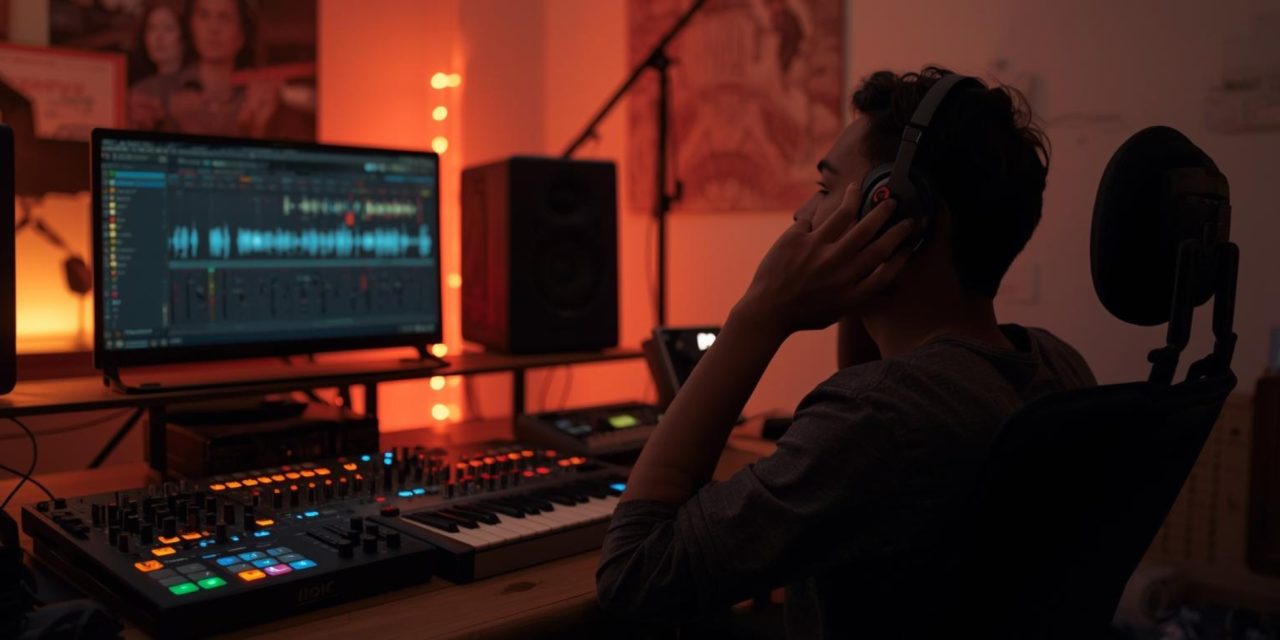
Ever build a loop you swear is fire, only to realize it sounds like it’s been pacing the room for 16 bars straight? We’ve all been there. Loops are meant to hypnotize, not annoy—and when done right, they quietly do the heavy lifting in great tracks. The difference between a loop that slaps and one that stalls usually comes down to depth, movement, and just enough surprise to keep ears curious.
Layering Sounds for Depth and Movement
Layering is the backbone of engaging loops, turning flat ideas into full-bodied musical moments. Instead of relying on a single sound, strong loops are built like conversations—each layer has a role, a range, and a reason to exist.
Start with a solid low-end foundation. A bass layer that properly occupies the lower frequencies anchors the loop and gives it weight without overwhelming the mix. This layer should feel steady and intentional, not overly busy.
From there, introduce a mid-range element to carry harmony or melody. A versatile synth—such as one built in Serum—works well here, offering tonal richness and subtle movement. This layer is often where an emotional character lives, shaping how the loop feels rather than how loud it hits.
Finally, high-frequency elements like percussion, hi-hats, or airy lead textures add brightness and rhythmic interest. These sounds create contrast and energy, helping the loop feel alive rather than static. When each layer occupies its own frequency space, the loop feels deep, balanced, and engaging—without sounding cluttered.
Using Dynamics and Variation to Avoid Loop Fatigue
A loop doesn’t need to change completely to stay interesting—it just needs to breathe. Dynamics and variation introduce motion, guiding listeners through subtle rises and falls that keep the ear engaged.
Automation is one of the simplest ways to achieve this. Gradual volume shifts can build tension, while sudden changes create moments of excitement or release. Logic Pro’s Automation tools make it easy to shape these micro-movements without disrupting the groove.
Sidechain compression is another powerful technique for adding rhythmic energy. Routing a kick drum through a compressor linked to a synth loop creates a gentle ducking effect, allowing the kick to cut through while adding bounce and momentum. The result feels dynamic, polished, and undeniably modern.
You can also introduce variation by layering instruments at different moments or slightly altering harmonies over time. Even minimal changes—like adding a subtle harmony halfway through—can refresh the loop and extend its replay value. These techniques work together to transform simple patterns into evolving soundscapes that listeners want to revisit.
Final Thoughts
Engaging loops aren’t about complexity. Rather, they’re about intention. Thoughtful layering adds depth, while dynamics and variation prevent repetition from turning into fatigue. When loops feel alive, they don’t just support a track—they invite listeners to stay longer and come back again.
Can your loops hold attention beyond the first eight bars? DLK Lounge dives deeper into creative techniques, sound design insights, and production ideas that help your music linger long after the loop ends. Stay tuned for more!
