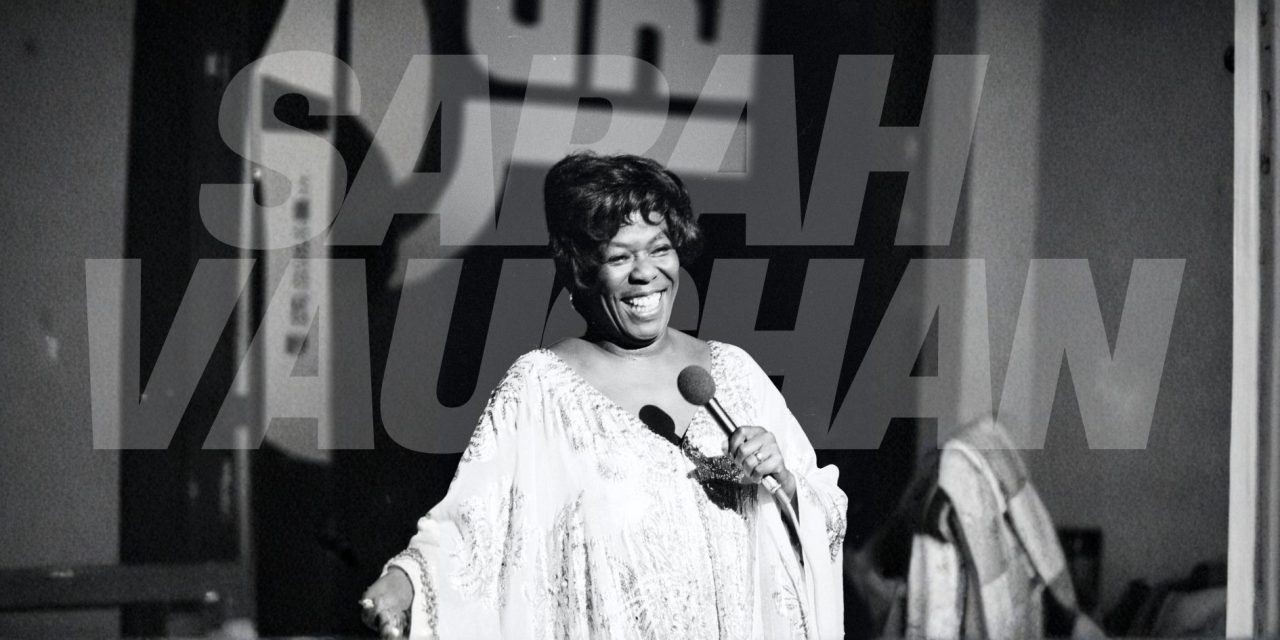
Some singers perform a melody exactly as it was written. Sarah Vaughan transformed it into something entirely her own. With extraordinary vocal control, breathtaking range, and an instinct for emotional storytelling, she approached every standard as a conversation rather than a performance. Whether interpreting a jazz classic or reinventing a beloved ballad, Vaughan found new colors, unexpected harmonies, and deeper meaning that few vocalists could match.
From her gospel roots in Newark to her emergence as one of jazz’s most revered voices, her artistry redefined what a singer could accomplish. This article explores the journey, technique, and lasting legacy behind the remarkable artist known as The Divine One.
Introduction: The Voice of Sarah Vaughan
Sarah Vaughan’s contralto range, spanning nearly three octaves, distinguished her from peers like Ella Fitzgerald’s soprano and Dinah Washington’s mezzo-soprano approaches. Her documented vocal range from D3 to F6 gave her access to notes rarely reached by other jazz singers. This breadth allowed her to shape phrases across wide intervals while maintaining warmth and clarity.
Critics in the 1940s noted her timbre carried operatic qualities. Some described her voice as possessing the richness of a dramatic soprano. Others compared her controlled vibrato and tonal depth to coloratura traditions.
These early assessments positioned her alongside classical singers rather than purely jazz vocalists. The comparisons highlighted how her technique blended power with precision. Such descriptions helped establish her reputation beyond standard jazz club circuits.
Mercury Records introduced the marketing term The Divine One in 1959. The phrase gained traction among industry professionals and appeared on album packaging. Colleagues and promoters adopted it as shorthand for her elevated status in vocal jazz.
Early Life and Musical Beginnings
Sarah Vaughan began formal piano study at age seven while singing in Newark’s Mount Zion Baptist Church choir by age twelve. Her early training combined classical technique with gospel traditions. These foundations shaped her distinctive approach to phrasing and emotional delivery throughout her career.
She studied Art Tatum recordings note-for-note, absorbing complex harmonic ideas that later informed her vocal improvisations. Local clubs including the Alcazar and Rialto Theater provided her first exposure to professional musicians. These venues offered practical lessons in stage presence and audience interaction.
By age fifteen, she had transitioned from church settings to professional piano work. This period marked her shift from sacred music to secular performance contexts. The move required adapting her vocal technique for different repertoire and venues.
Her 1942 amateur night at the Apollo served as preparation rather than an immediate breakthrough. The experience tested her ability to connect with diverse audiences. It also introduced her to the competitive environment of New York jazz clubs where many vocalists developed their craft.
Discovery and Rise to Fame
Sarah Vaughan’s 1943 Apollo Theater amateur night win led directly to Earl Hines hiring her as second pianist and occasional vocalist. This opportunity marked the beginning of her professional journey in the jazz world. Her distinctive vocal approach quickly caught attention among band members and audiences alike.
The young singer found herself immersed in the swing era sound that dominated popular music at that time. She learned stagecraft and timing through nightly performances with experienced musicians. This period shaped her understanding of how to connect with listeners through song interpretation.
Three key moments defined her early trajectory toward national recognition. The first involved an amateur night competition victory that opened professional doors. The second came when she joined a major touring ensemble. The third occurred as the group reorganized under new leadership.
- October 1942 amateur night prize at the Apollo Theater
- December 1943 Earl Hines band joining as pianist and singer
- 1944 Billy Eckstine departure forming new band with key personnel
Radio exposure played a crucial role in building her reputation beyond live venues. Broadcasts on WEAF and WNEW reached listeners across multiple states during evening hours. These airings introduced her voice to audiences who had never attended a jazz club performance.
Apollo Theater Breakthrough
The Apollo Theater’s October 1942 amateur night offered a $10 first prize plus a one-week booking when Sarah Vaughan entered as a 20-year-old unknown. The venue served as a testing ground for aspiring performers seeking their first professional break. Success there often translated into further opportunities within the entertainment industry.
The competition followed a structured format that combined expert judgment with audience response. Three judges evaluated each contestant while an applause meter measured crowd reaction. This dual system ensured both technical quality and popular appeal determined the winner.
- Song selection: ‘Body and Soul’ performed in D-flat key
- Audience vote count resulting in 15-to-1 margin victory
- One-week engagement starting October 29 paying $75 weekly
The performance showcased her ability to transform familiar material into something personal and engaging. Listeners responded to her phrasing choices and emotional delivery throughout the piece. This victory established her presence within the competitive New York jazz scene.
Early Recordings and Collaborations
Sarah Vaughan’s first commercial recording occurred May 25, 1945 for Continental Records with Dizzy Gillespie and Charlie Parker on ‘Lover Man.’ This session captured her voice alongside two instrumental innovators who were reshaping jazz vocabulary. The resulting track demonstrated her comfort with modern harmonic approaches.
Subsequent studio work expanded her catalog across different labels and musical settings. Each project introduced new collaborators who influenced her developing style. These experiences built her reputation as a versatile and reliable recording artist.
| Date | Label | Track | Personnel |
| May 1945 | Continental | Lover Man | Gillespie, Parker, recorded in New York, engineered by local staff |
| January 1946 | Musicraft | If You Could See Me Now | Tadd Dameron arrangement, recorded in New York, engineered by studio team |
| December 1947 | Musicraft | Nature Boy | Recorded in New York, engineered by session staff |
| April 1949 | Columbia | Black Coffee | Recorded in New York, engineered by label technicians |
These early sessions established patterns that continued throughout her career in the recording studio. She worked with arrangers who understood her vocal strengths and preferences. The resulting material showcased both her technical facility and interpretive depth across various song types.
Signature Style and Vocal Technique
Sarah Vaughan’s technical vocabulary included quarter-tone bends, portamento slides spanning major thirds, and scatting syllables derived from bebop horn lines. These elements formed the foundation of her distinctive approach to jazz standards.
Microtonal inflection appeared throughout her phrasing. On the 1954 recording of September Song, Vaughan introduced subtle pitch variations during the bridge that shifted the melody away from its written notes.
The same technique surfaced in live settings where she adjusted single notes by fractions of a tone to match the mood of each performance. Her command of these inflections set her apart from other singers of the period.
Vocalese adaptation represented another layer of her craft. Vaughan studied transcribed solos by Clifford Brown and incorporated their melodic lines into her singing with lyrics added by Jon Hendricks.
This method allowed her to deliver instrumental ideas through the voice while maintaining the original harmonic structure. Recordings from her Roulette period show how these adaptations expanded the emotional reach of familiar tunes.
Dynamic range within single phrases marked another signature trait. On the 1958 alternate take of Send in the Clowns, Vaughan moved from near-whisper volume to full projection without breaking the phrase.
This control created tension and release that mirrored the lyric’s emotional arc. Miles Davis referenced this ability during his 1963 DownBeat blindfold test, noting how her dynamics transformed standard material into something more conversational.
Conclusion
Sarah Vaughan’s remarkable voice was no accident. It was shaped by years of musical training, gospel influences, relentless practice, and the opportunities that followed her breakthrough at the Apollo Theater. Combined with her fearless approach to phrasing and improvisation, these early experiences laid the foundation for one of jazz’s most distinctive vocal styles.
In the next part of this series, we’ll explore the recordings, performances, and artistic innovations that cemented Sarah Vaughan’s place among the greatest jazz vocalists of all time.
Which aspect of Sarah Vaughan’s early journey surprised you the most?
Visit DLK Lounge to discover more artist spotlights, music history, and in-depth features celebrating the legends who shaped modern music.
