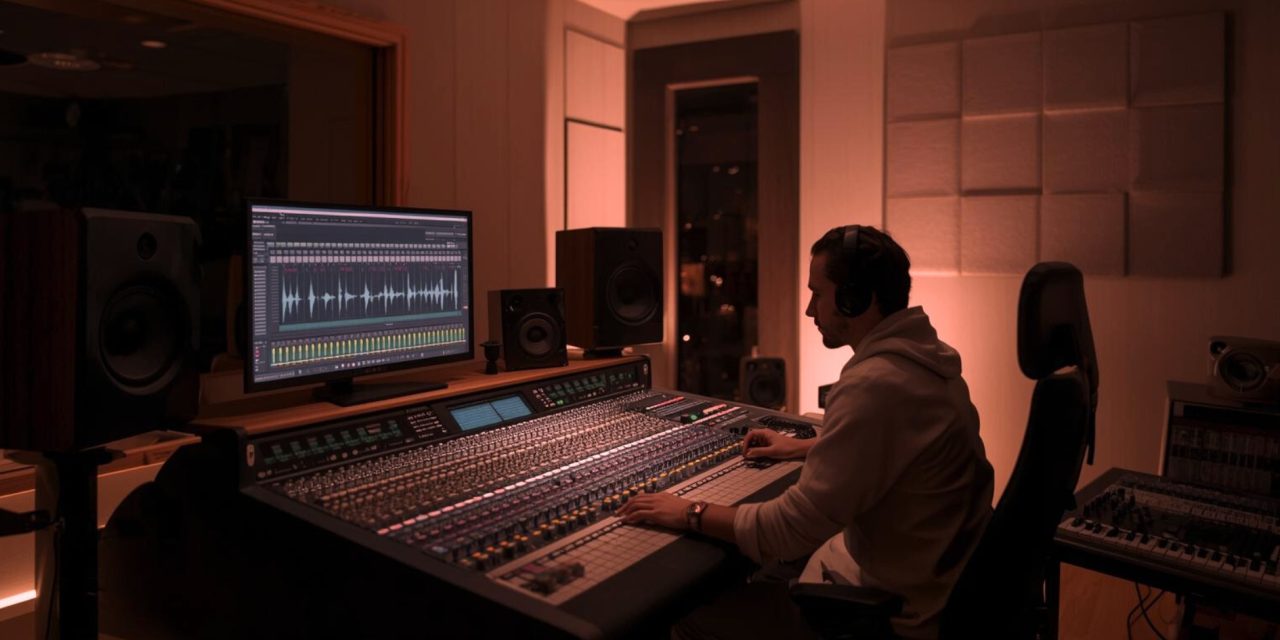
Chill tracks don’t rely on big moments to impress the listener. They sit in the background, quietly revealing whether the mix is working or slowly falling apart. When something is off, people may not notice immediately, but they feel it. A harsh high end interrupts focus, and a muddy low end makes the track feel heavy instead of calming.
Mixing and mastering guide how chill music breathes and settles, ensuring the atmosphere supports relaxation rather than competing for attention. In this style, polish isn’t about excitement; it’s about not breaking the mood.
Balancing Elements Without Losing the Chill
A balanced mix in chill music is about cooperation, not competition. Every element should feel present without demanding attention. Levels, panning, and EQ must work together to create space rather than clutter.
Using a spectrum analyzer like SPAN helps visualize where frequencies overlap. This reveals problem areas before they become audible distractions. Once identified, EQ adjustments should focus on subtle cuts rather than aggressive boosts, allowing each element to breathe naturally.
Sidechain compression plays an important role, especially between the kick and bass. A gentle sidechain keeps the low end tight without creating the pumping effect common in dance music. The goal is cohesion, not drama. Small, patient adjustments here often separate a muddy mix from one that feels smooth and intentional.
Mastering for Polish, Not Pressure
Mastering is the final checkpoint where a track is refined for real-world listening. It enhances clarity, controls dynamics, and prepares the music for distribution without stripping away its character.
Multiband compression tools like the Waves SSL G-Master allow precise control over different frequency ranges, helping tame problem areas while preserving warmth. Limiting with FabFilter Pro-L2 ensures the track reaches competitive loudness without distortion or fatigue.
Monitoring loudness levels is essential, especially when targeting streaming platforms that typically normalize around -14 LUFS. A/B comparisons before and after mastering are invaluable here. They reveal whether changes truly improve the track or simply make it louder. In chill music, louder is rarely better.
Conclusion
Mixing and mastering chill music require discipline, patience, and a clear understanding of restraint. These stages aren’t about showing off technical skills but about protecting mood, clarity, and emotional flow. When approached thoughtfully, they transform simple ideas into immersive listening experiences that feel effortless to the listener.
When you listen back to your track, does it feel calm by accident or calm by design? Check out DLK Lounge for more insights into how technical choices shape emotion, clarity, and the lasting feel of soulful and chill music.
